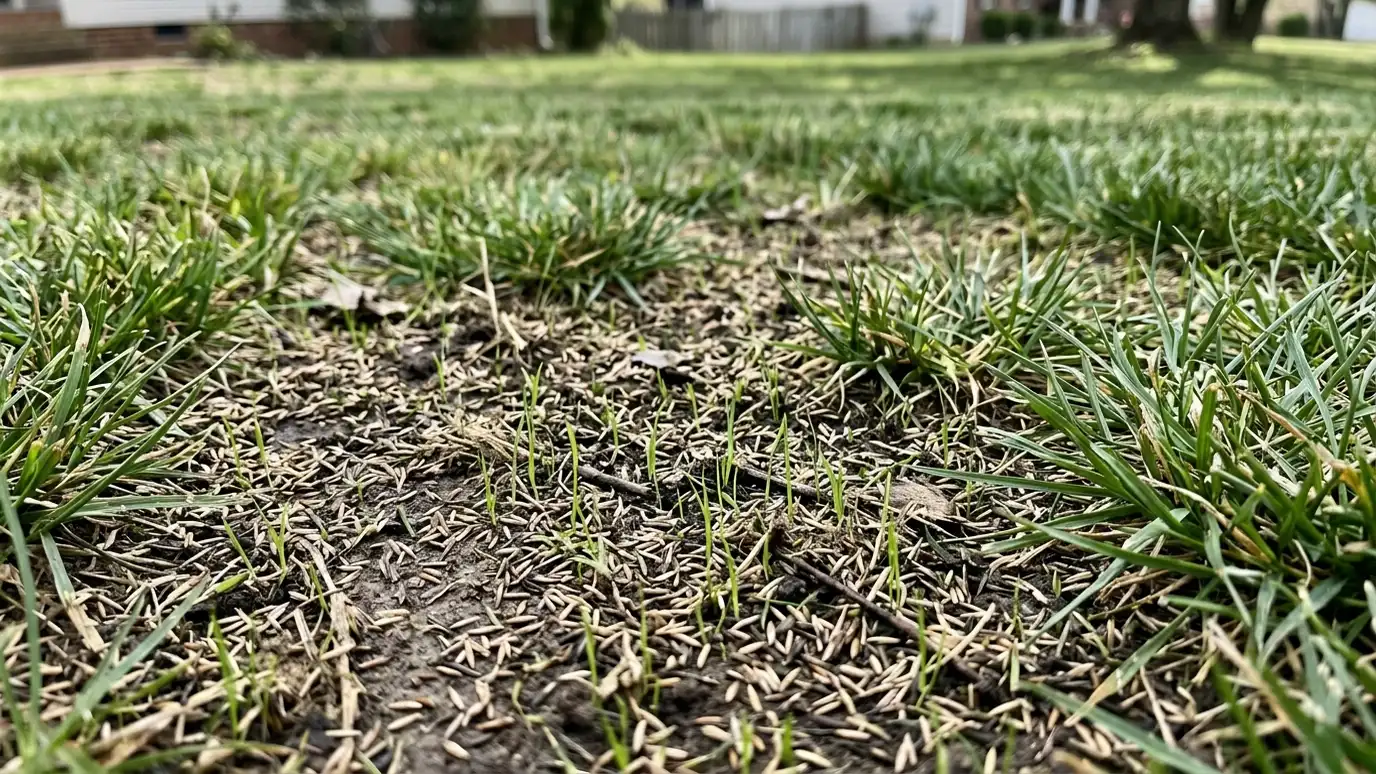
New seed spread across your existing lawn to thicken thin areas, repair summer damage and renew aging turf.
A thick lawn is the best weed control there is, and overseeding is how you get there. Over time, grass plants thin out from heat, drought, shade, disease and wear, and the gaps are filled by weeds. Overseeding spreads new, improved seed across the existing turf so it fills in, becomes denser and renews itself. In Middle Tennessee, tall fescue lawns benefit from overseeding almost every fall, because fescue is a bunch-type grass that does not spread to fill gaps on its own.
We choose a seed mix suited to your sun, shade and use, and we spread it with calibrated equipment so coverage is even. For best results we combine seeding with core aeration, so seed sits in the holes and touches soil. We follow with starter fertilizer and give you a simple watering plan, because new seed needs to stay moist while it sprouts. We also tell you what to avoid, such as certain weed treatments, and when to mow for the first time, so the new grass gets established.
Sun, shade and traffic decide the mix. We choose varieties for your conditions.
Aeration or slit seeding puts seed in contact with soil, which greatly improves germination.
A starter blend supports young roots as the new seedlings come up.
You receive clear steps for keeping seed moist and for the first mow.
Drag the handle to compare.
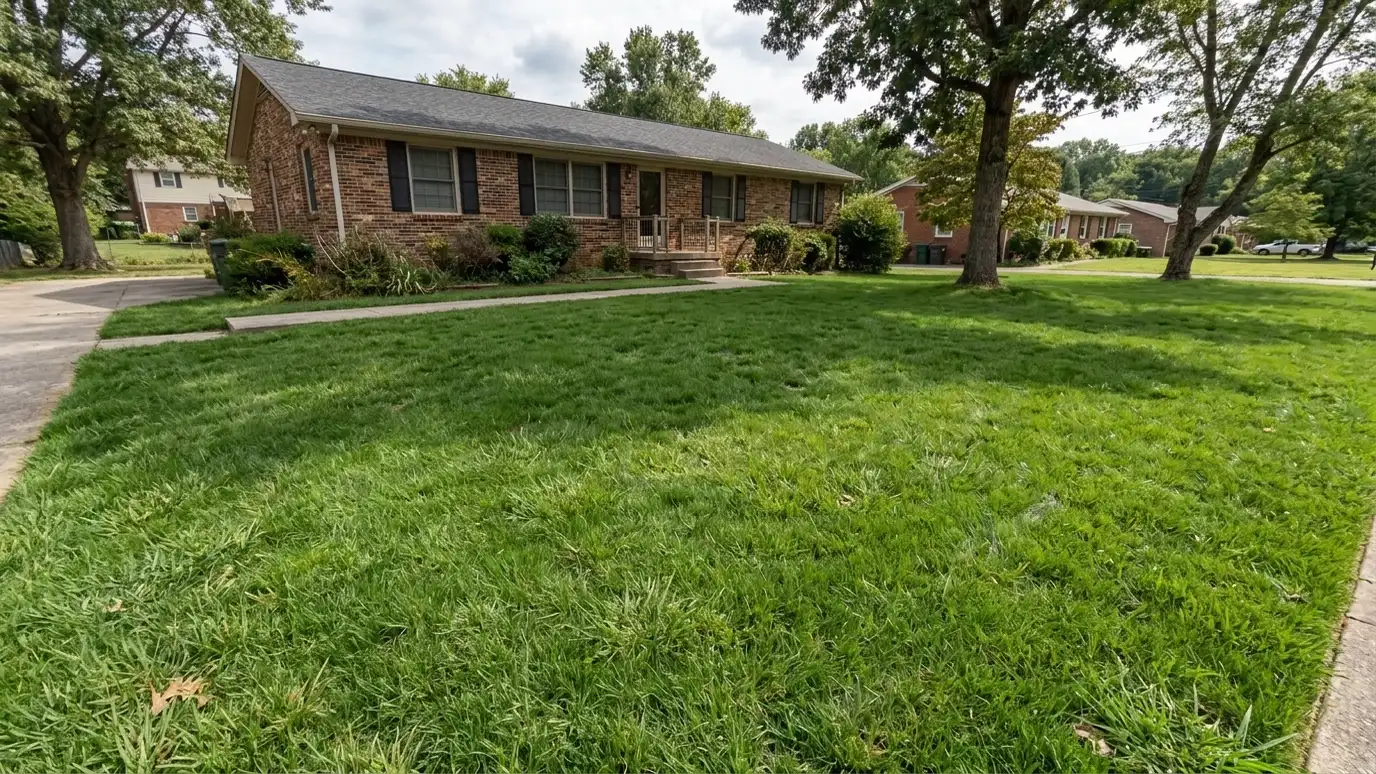
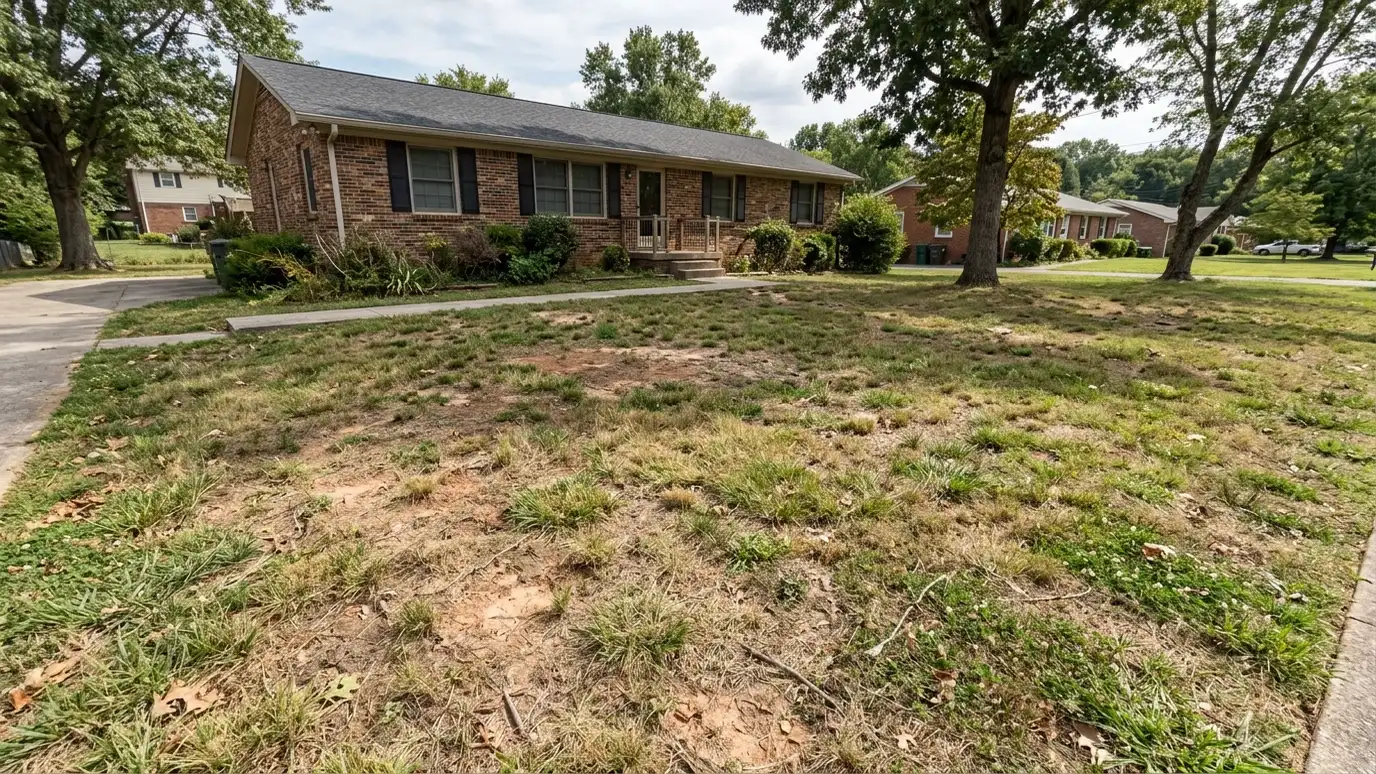 BeforeAfter
Fills thin areas.
Sun or shade.
Better germination.
Supports new roots.
Simple steps.
First cut.
Every topic has its own page with what to expect and how we approach it.
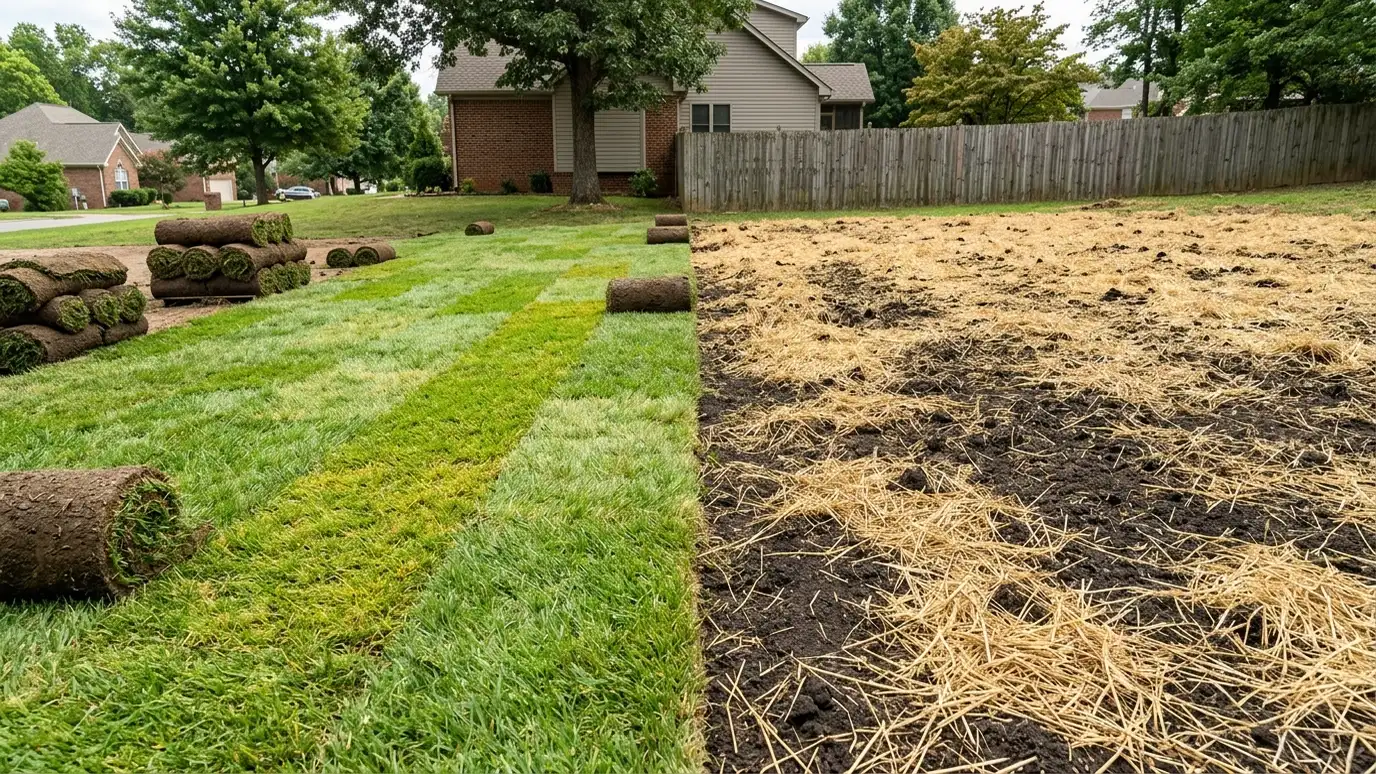 Topic guideSeeding vs Sod ComparedSeed, sod and hydroseed compared on cost, speed, grass choices, timing and the care each needs to succeed.Learn more
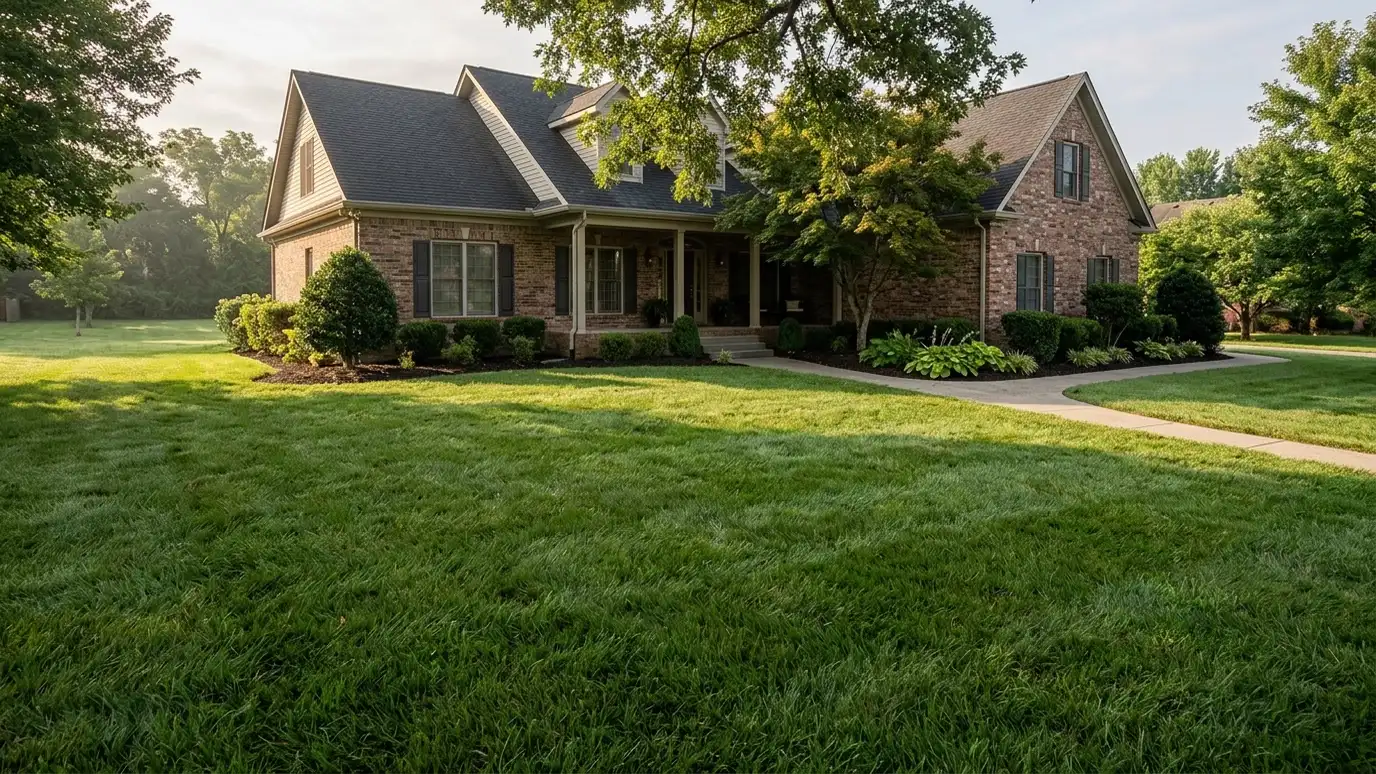 Lawn typeTall Fescue LawnsThe most common Middle Tennessee lawn: deep green, fine to medium texture and happiest in the cool seasons…Learn more
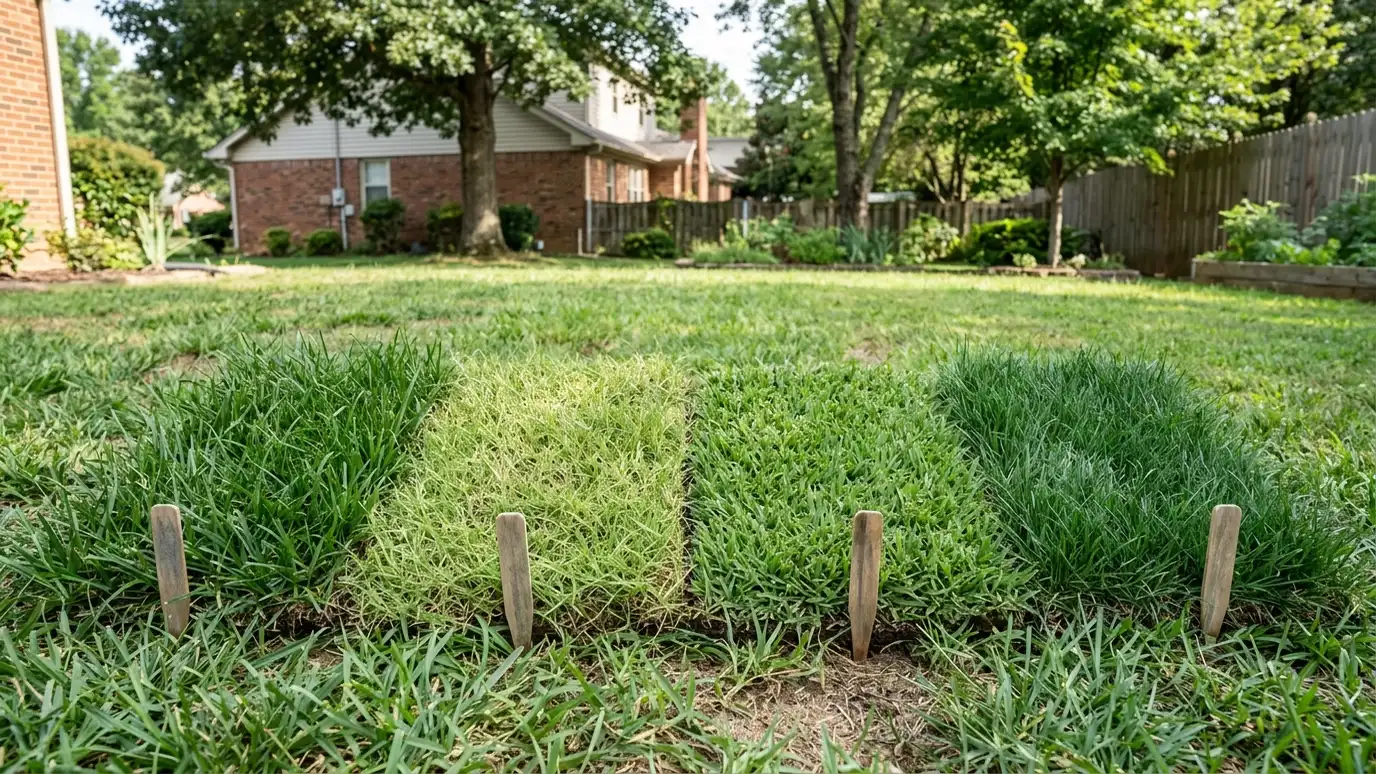 Topic guideGrass Types ComparedTall fescue, bermuda, zoysia and Kentucky bluegrass compared on sun, shade, wear, water, color and winter look.Learn more
Enter the job, grass and area to see seed pounds, fertilizer pounds and bags, and a planning range for installed overseeding.
You tell us about your lawn and what you want to change, from weeds to a full program, and we set a visit that fits your day.
We walk the lawn, identify the grass, check the soil, weeds, pests and drainage and talk through your goals.
We build a calendar of treatments for your grass type and give you an itemized written estimate with options.
Visits are scheduled by season and weather, and any gates, pets or irrigation are noted.
Crews apply products and perform services with calibrated equipment and leave notes after each visit.
Each season we review the results with you and adjust the plan for the next one.
For fescue and bluegrass, early fall. Warm-season grasses are seeded in late spring.
Often one to three weeks, depending on the seed and weather.
They are usually repaired with sod or plugs, or seeded in late spring. We advise.
The top layer needs to stay moist while seed germinates. We give you a schedule.
Many products do. We plan the order so seed can grow.
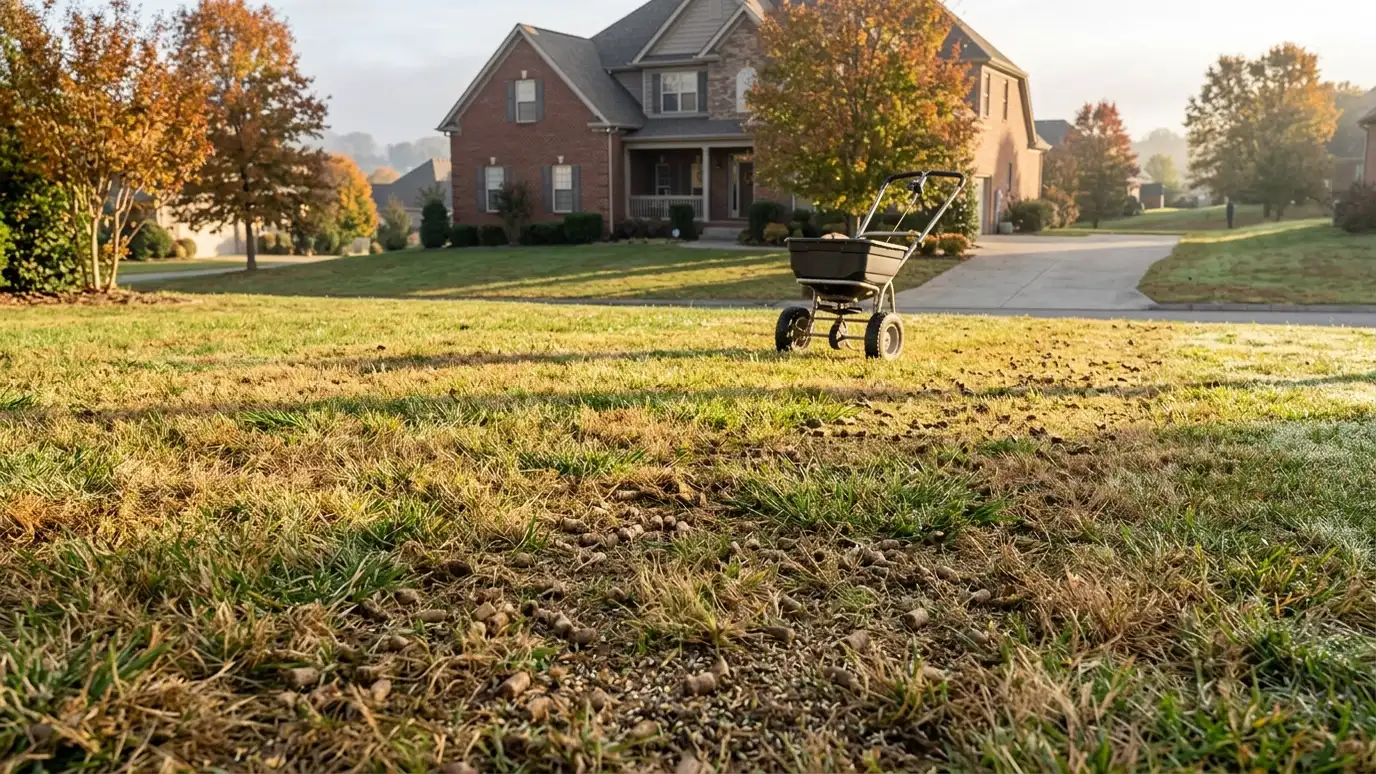 Aeration and Overseeding PackagesCore aeration, premium seed, starter fertilizer and aftercare in one fall package, the most effective way to renew…Explore
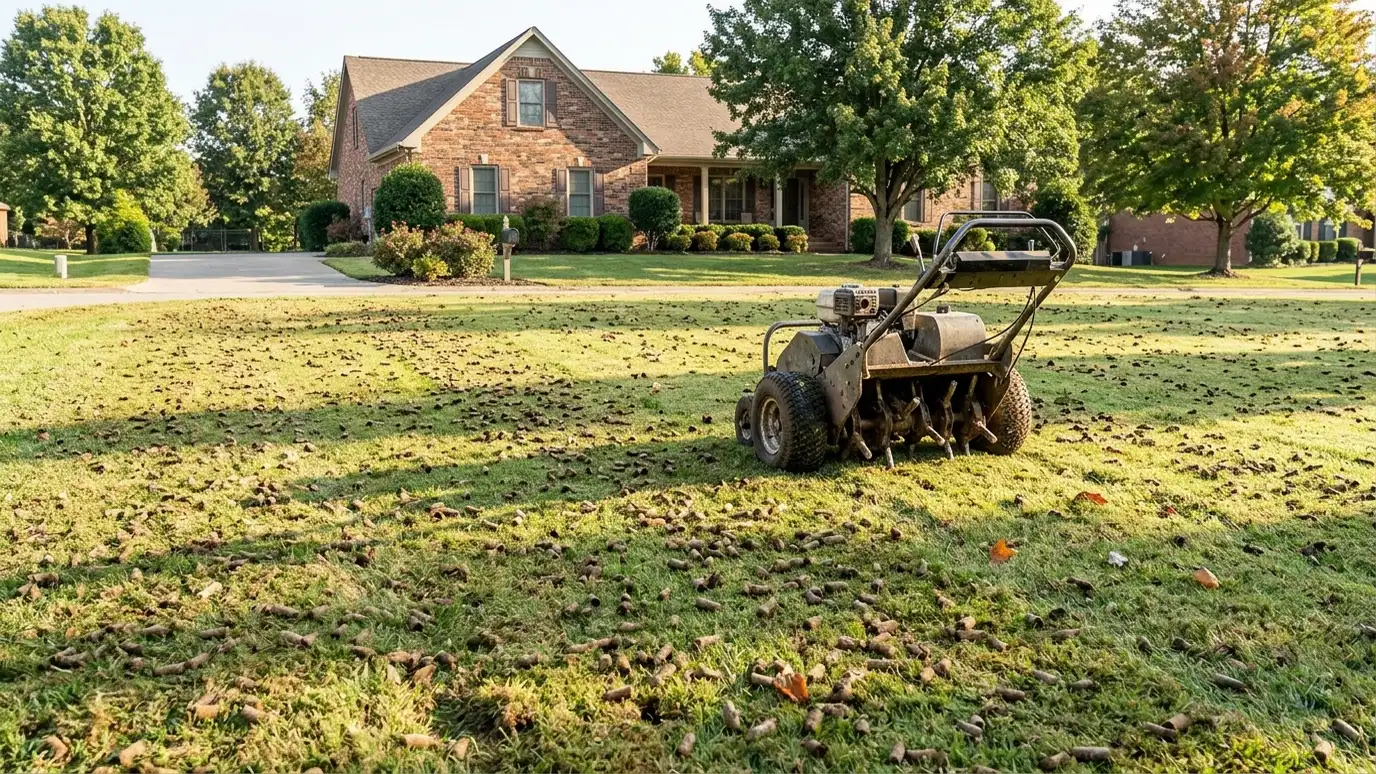 Core AerationMachine aeration that pulls small soil plugs to relieve compaction, so water, air and nutrients reach the roots.Explore
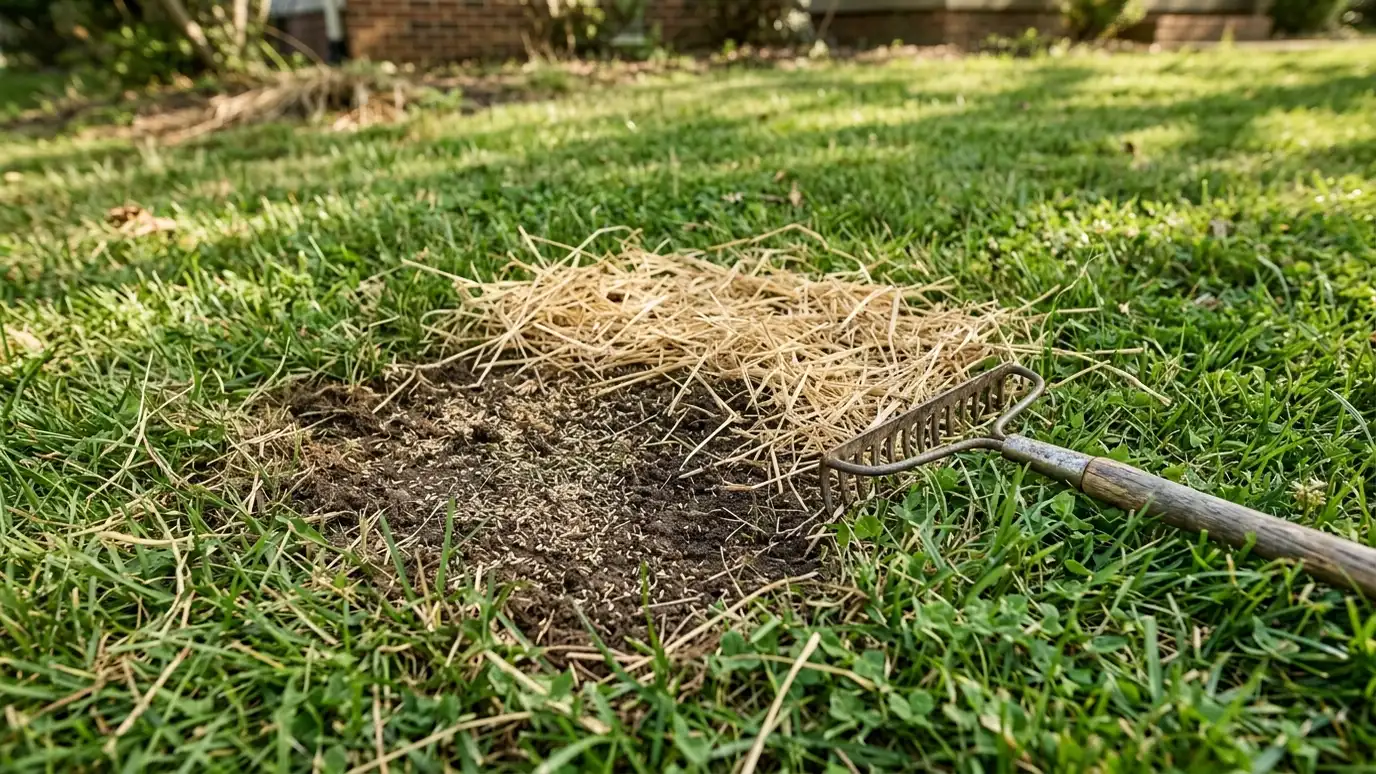 Bare Spot and Patch RepairTargeted repair of dead, thin or bare patches with new seed, sod or plugs, so small problems do…Explore
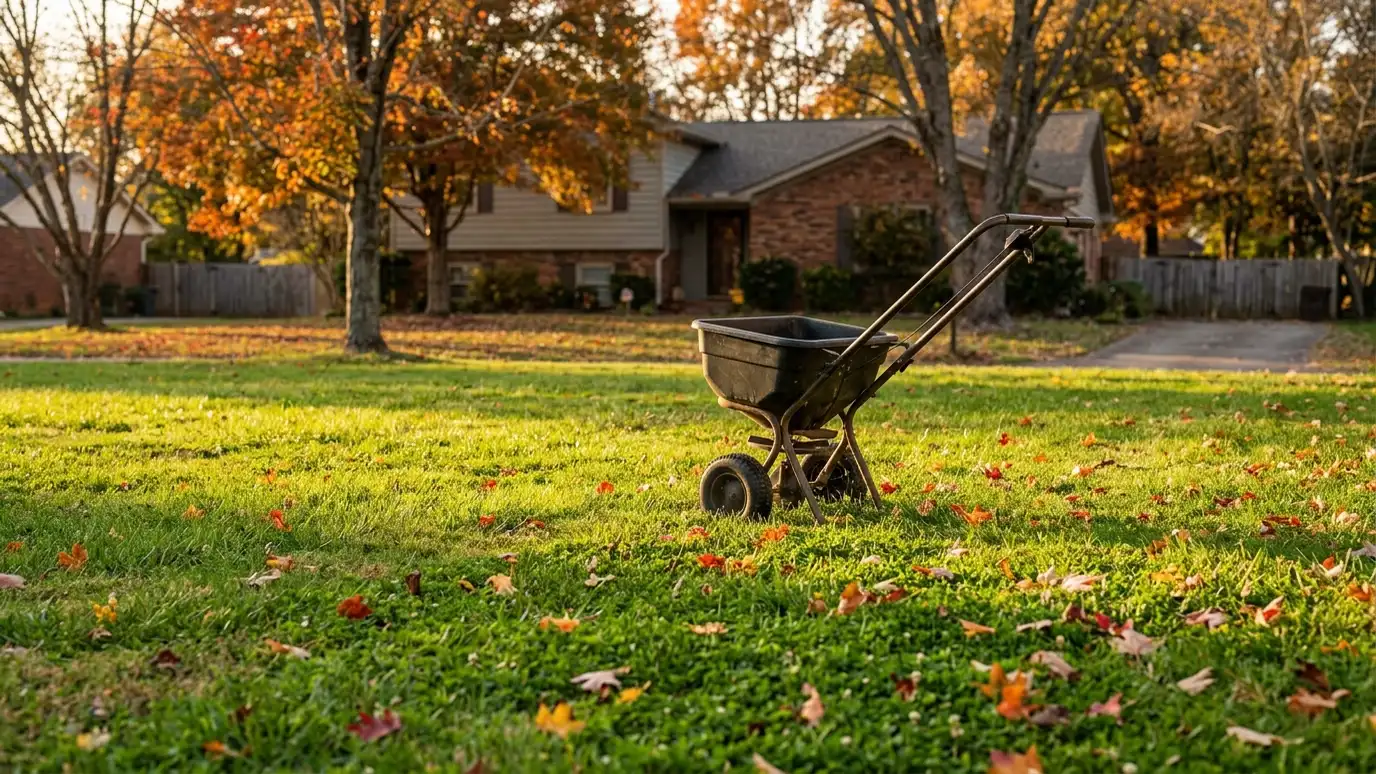 Fall Fertilization and WinterizerAutumn feeding that builds roots, repairs summer damage and sets up a faster, greener spring.Explore
Tell us about your lawn and we will call you back to set up a visit.
Or call (615) 357-7797 to talk now.