Removing the thick mat of dead stems and roots that blocks water and air, so your lawn can breathe and recover.
Thatch is the layer of dead and living stems, roots and runners that builds up between the green grass and the soil. A little is healthy, but when it exceeds about half an inch it acts like a sponge or a lid, holding moisture at the surface, blocking air and water and sheltering pests and disease. Warm-season grasses such as bermuda and zoysia build thatch quickly, and over-fertilized lawns of any type can too. In Nashville, a thick thatch layer often explains a lawn that feels spongy, looks patchy and does not respond to feeding.
We measure the thatch first, because many lawns that look thatchy actually only need aeration. When it is truly thick, we use a power rake or dethatcher with spinning blades or tines that pull the mat to the surface. We then clean up the debris, and follow with overseeding or fertilizer as needed. Timing matters: warm-season lawns are dethatched in late spring as they green up, and cool-season lawns in early fall, so they recover quickly. The process looks rough for a few weeks, but the turf rebounds.
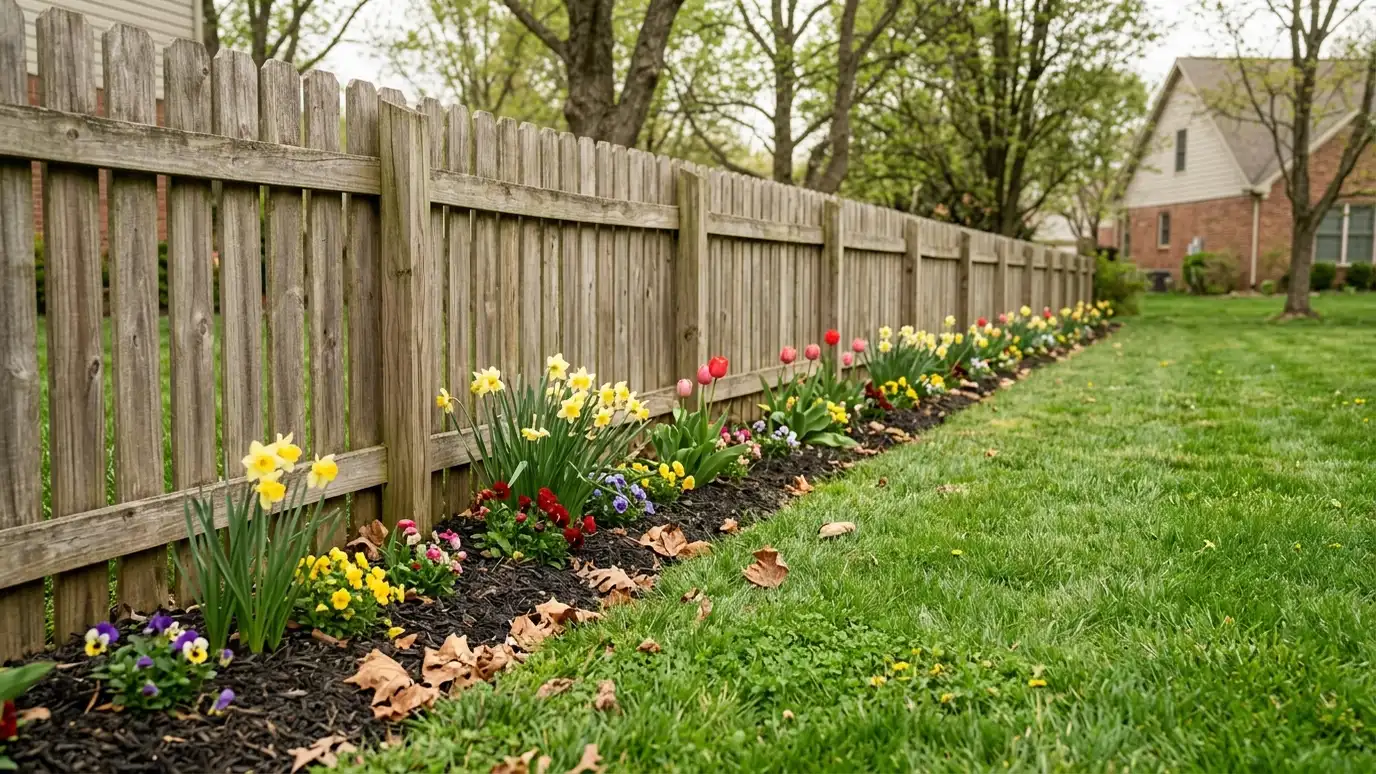
We check thatch depth, because aeration is often a gentler and better choice.
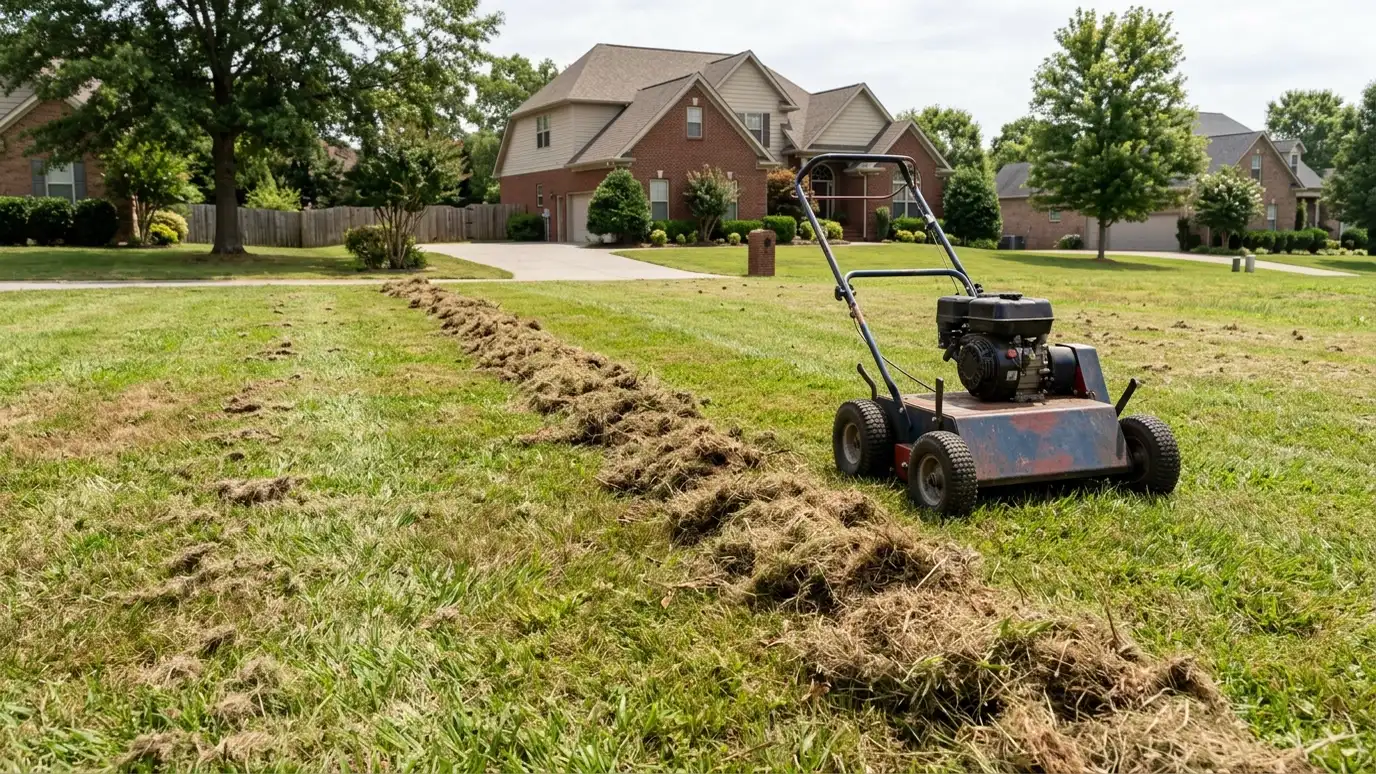
Spinning tines lift dead material to the surface so it can be removed.
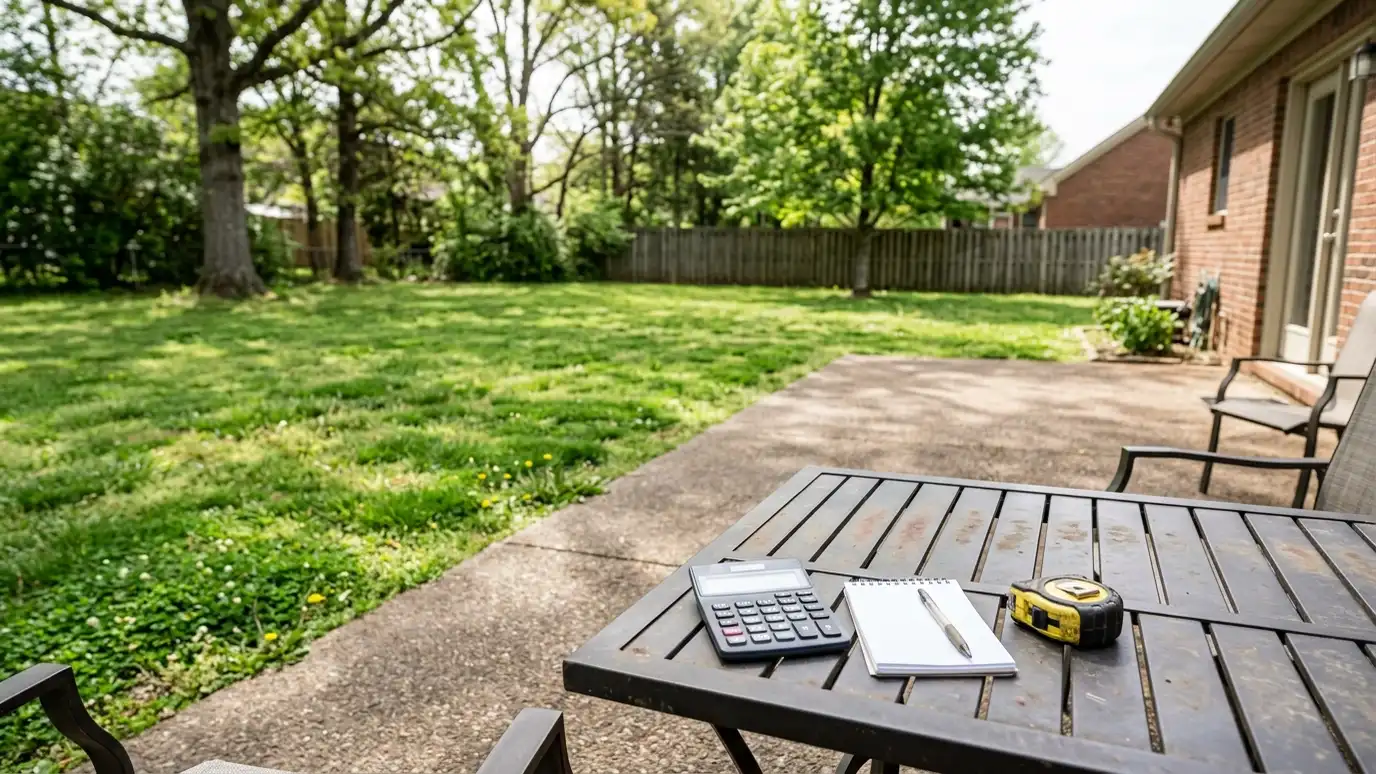
Warm-season lawns are dethatched as they green up, and cool-season lawns in early fall.
Seed, fertilizer and watering help the lawn recover after the stress of dethatching.
Drag the handle to compare.
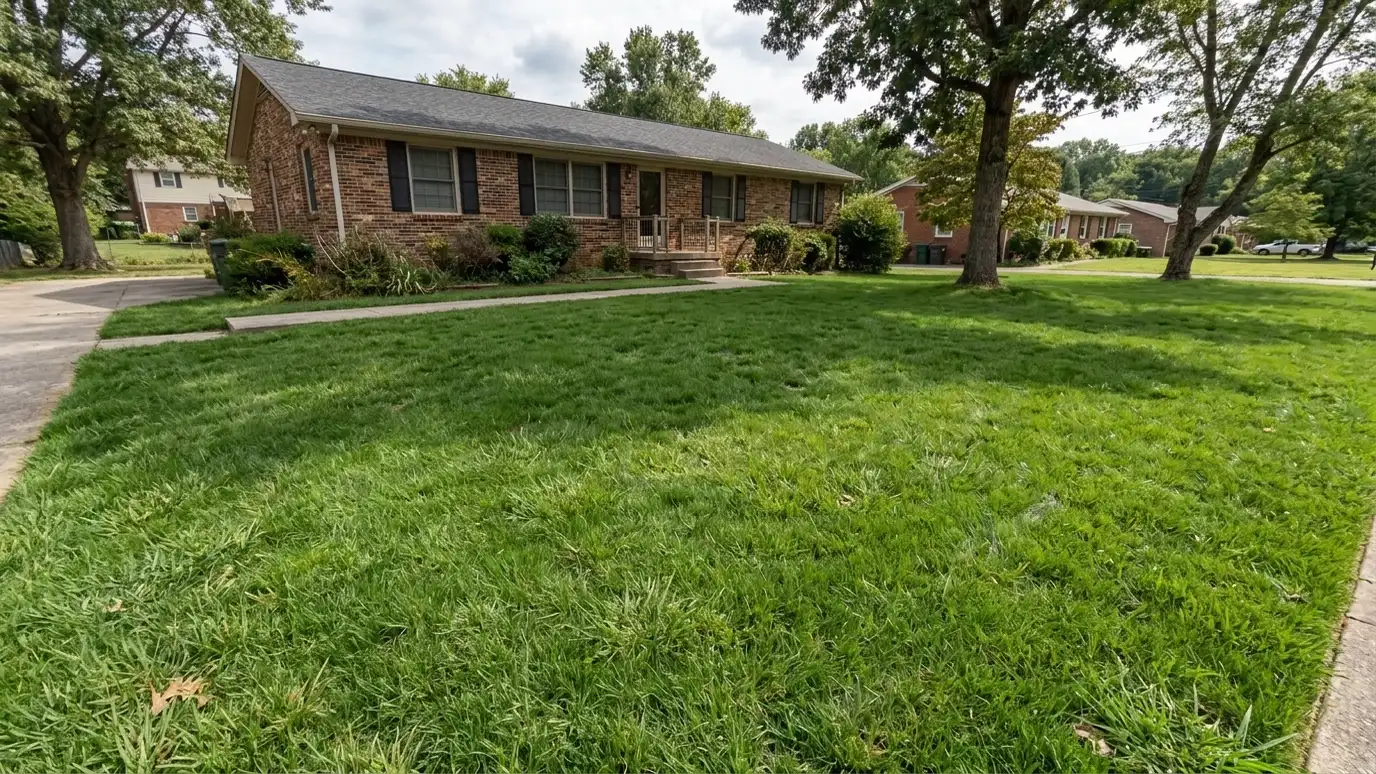
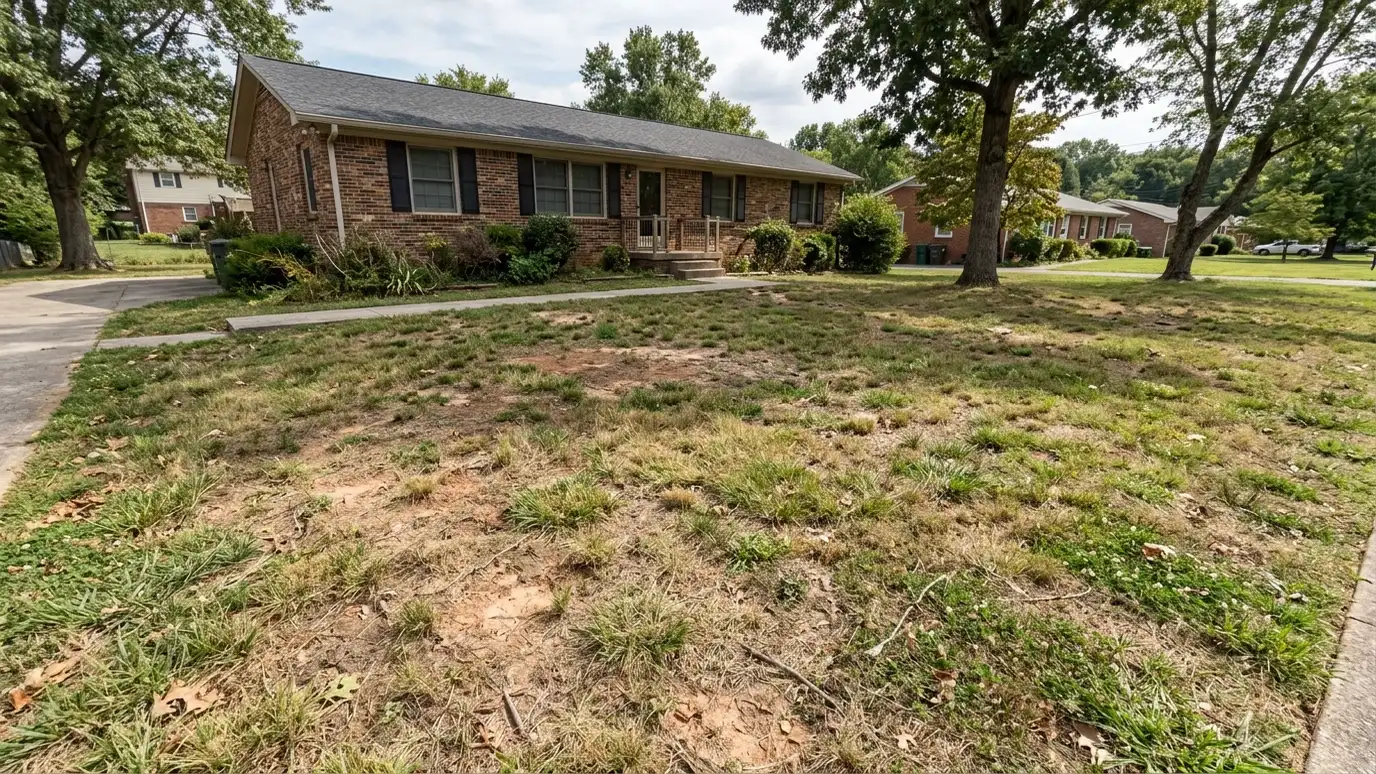 BeforeAfter
Opens the lawn.
Only when needed.
For your grass.
Seed and feed.
And air.
Debris removed.
Every topic has its own page with what to expect and how we approach it.
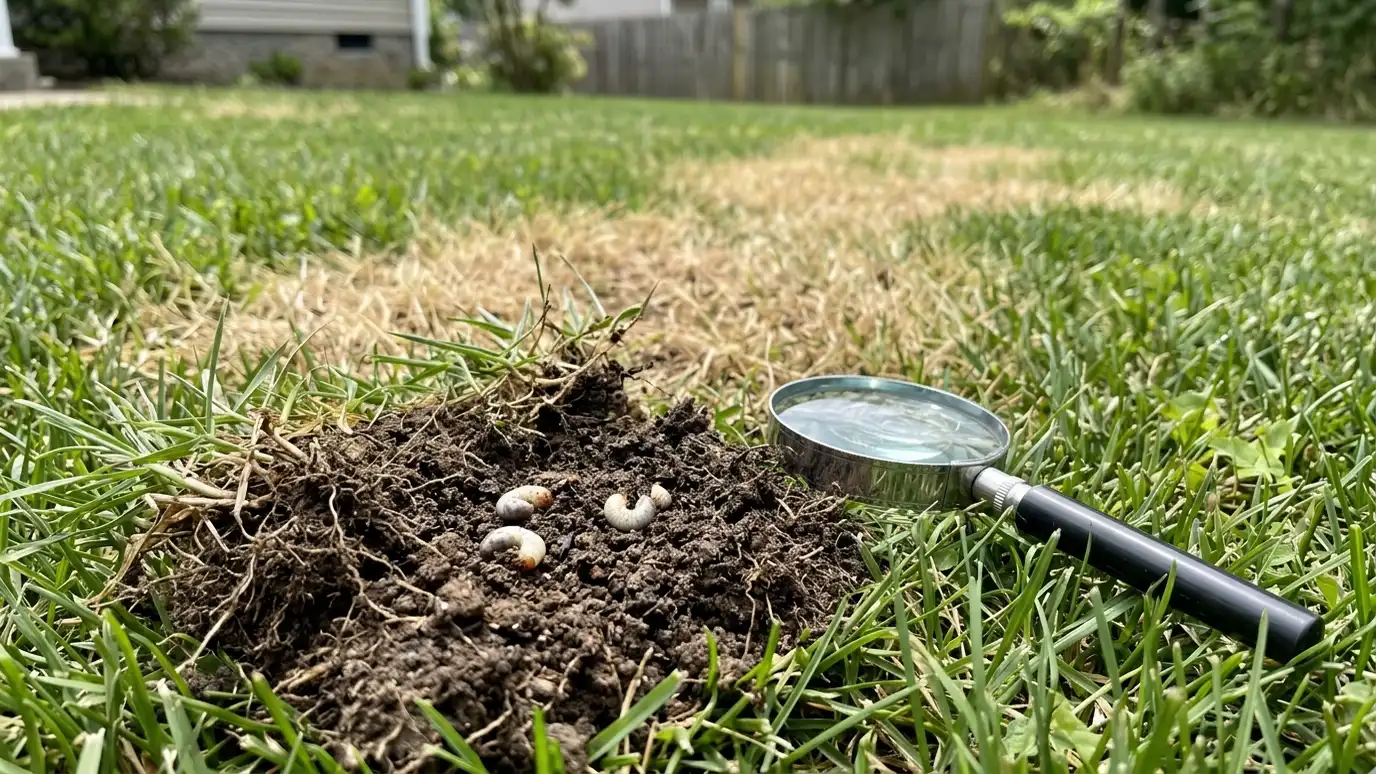 Topic guideDiseases and Pests GuideBrown patch, dollar spot, grubs, armyworms, chinch bugs and fire ants: signs, timing and what to do about…Learn more
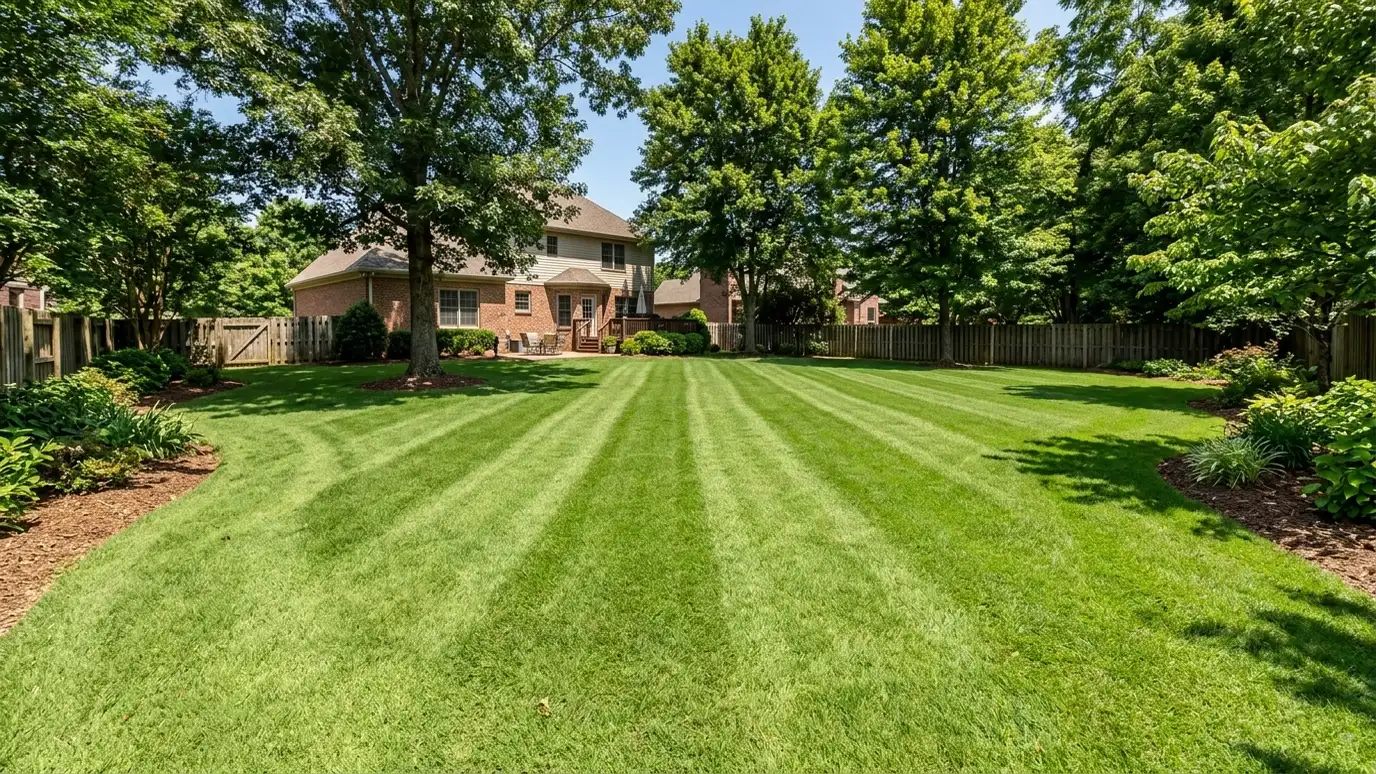 Lawn typeBermudagrass LawnsA tough, fine-textured warm-season grass that loves full sun, heat and traffic, and rests brown through winter.Learn more
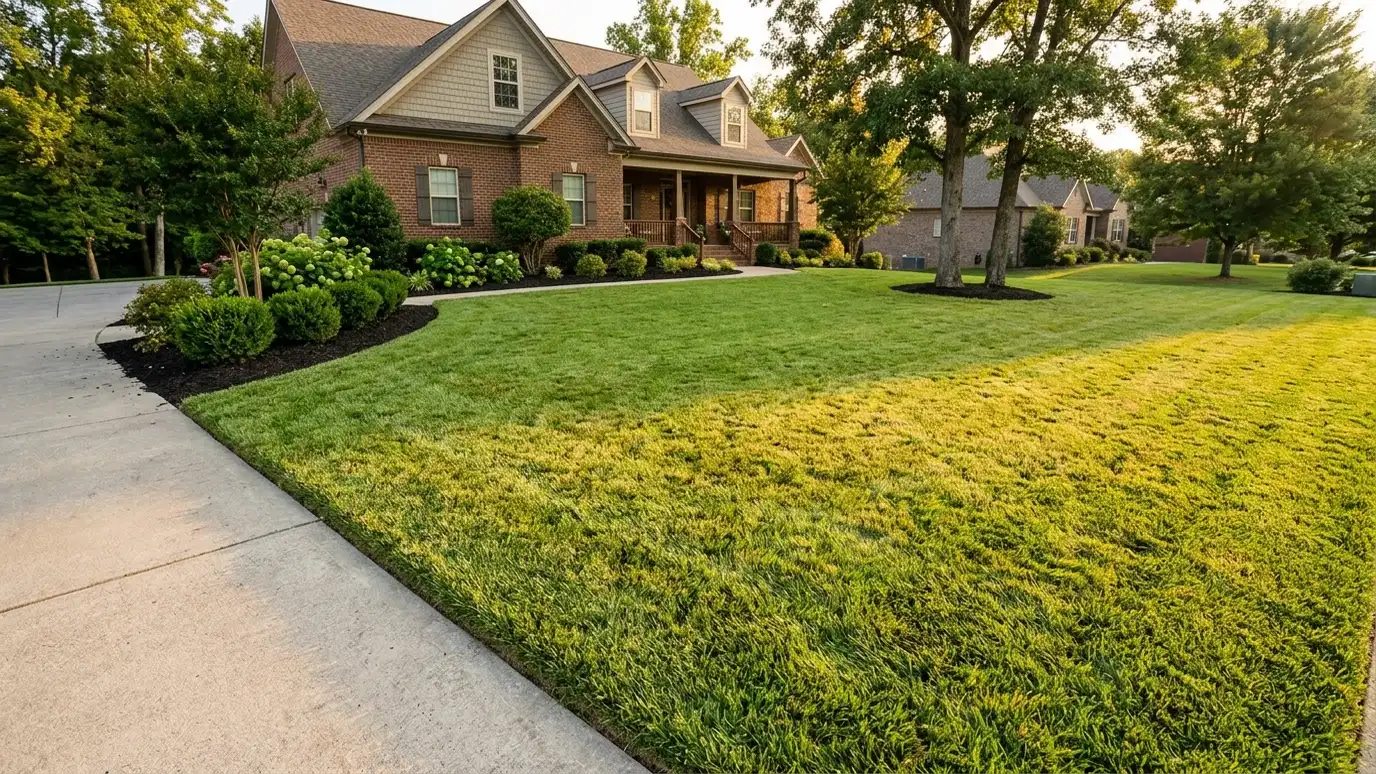 Lawn typeZoysia LawnsA dense, plush warm-season turf with good shade tolerance for a warm-season grass and a soft feel underfoot.Learn more
Tick what you see in your lawn and get a priority list and a plain recommendation: care, treat, renew or renovate.
You tell us about your lawn and what you want to change, from weeds to a full program, and we set a visit that fits your day.
We walk the lawn, identify the grass, check the soil, weeds, pests and drainage and talk through your goals.
We build a calendar of treatments for your grass type and give you an itemized written estimate with options.
Visits are scheduled by season and weather, and any gates, pets or irrigation are noted.
Crews apply products and perform services with calibrated equipment and leave notes after each visit.
Each season we review the results with you and adjust the plan for the next one.
The lawn feels spongy and a screwdriver meets a thick mat before soil. We measure it for you.
No. Dethatching removes the mat. Aeration pulls soil plugs.
It will look rough for a few weeks, then recover with proper care.
Only when thatch is thick. Many lawns do not need it every year.
Rental machines exist, but they are heavy and easy to overdo. We handle it with calibrated equipment.
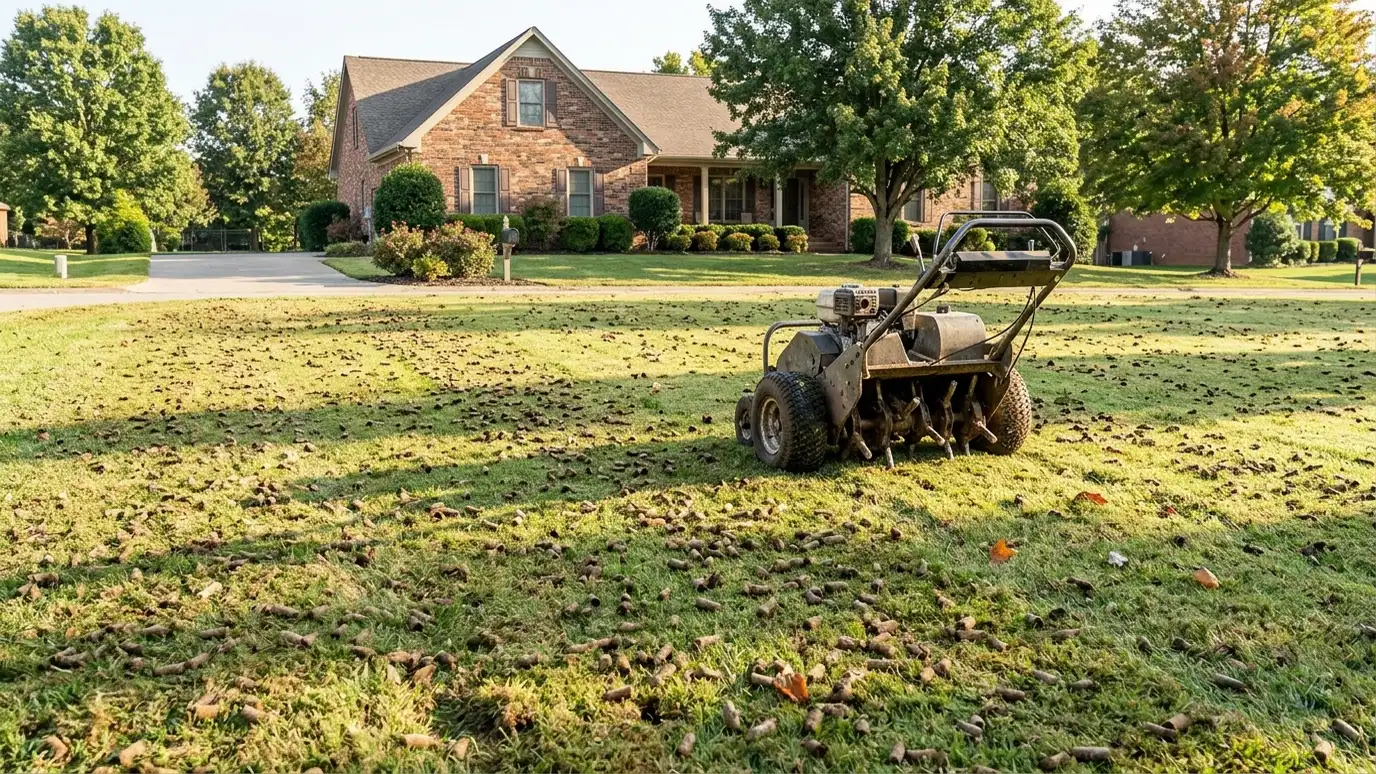 Core AerationMachine aeration that pulls small soil plugs to relieve compaction, so water, air and nutrients reach the roots.Explore
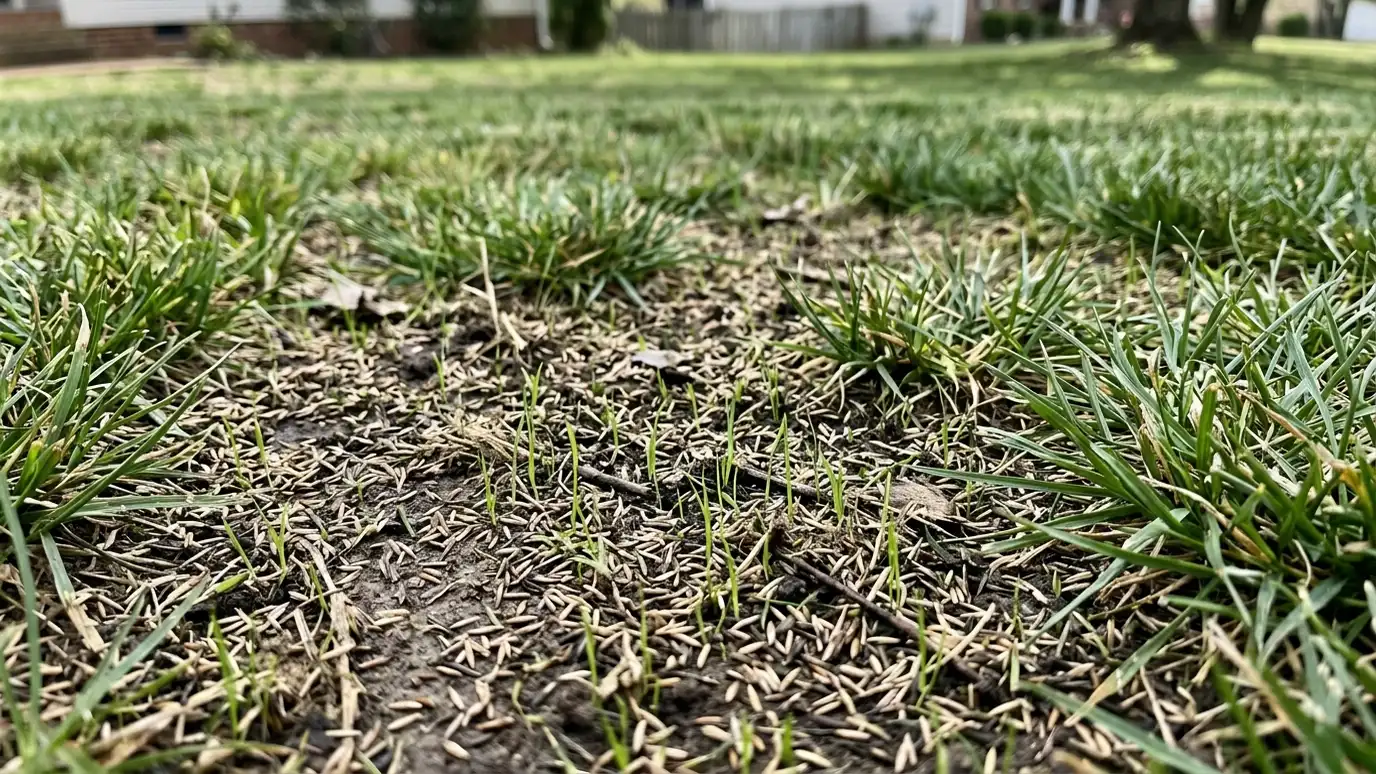 OverseedingNew seed spread across your existing lawn to thicken thin areas, repair summer damage and renew aging turf.Explore
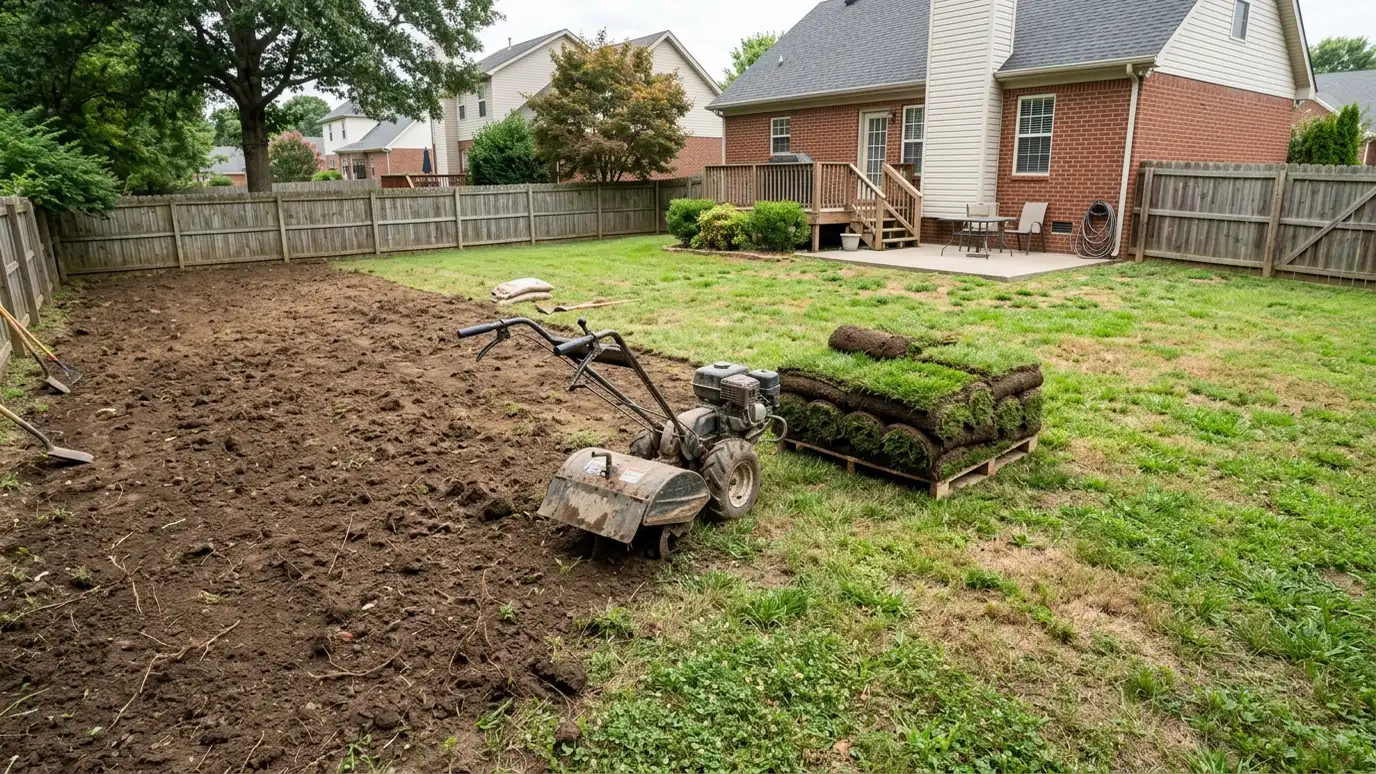 Lawn Renovation and RebuildsA full reset for lawns beyond repair: strip, grade, amend and replant with sod or seed for a…Explore
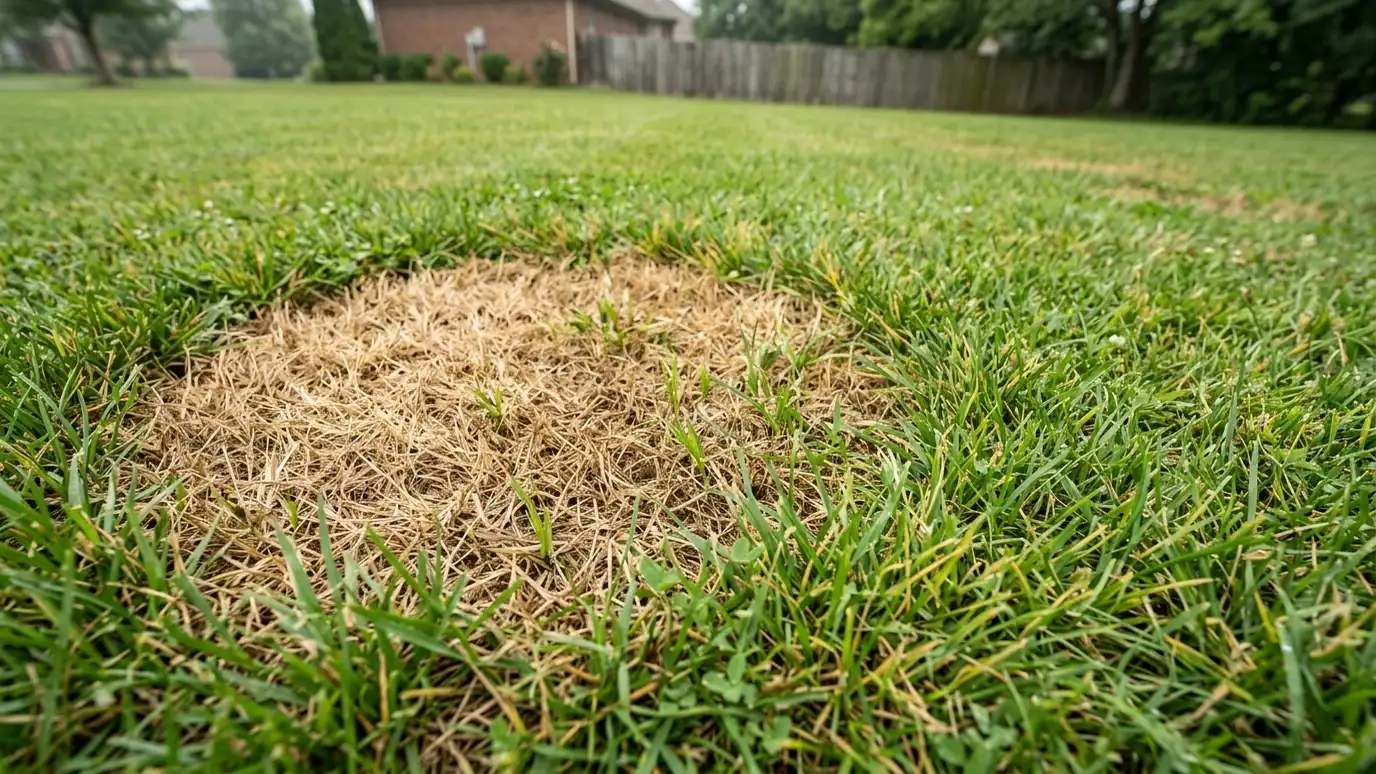 Lawn Disease ControlIdentification and treatment of lawn diseases such as brown patch, dollar spot and leaf spot, plus the habits…Explore
Tell us about your lawn and we will call you back to set up a visit.
Or call (615) 357-7797 to talk now.