What aeration does
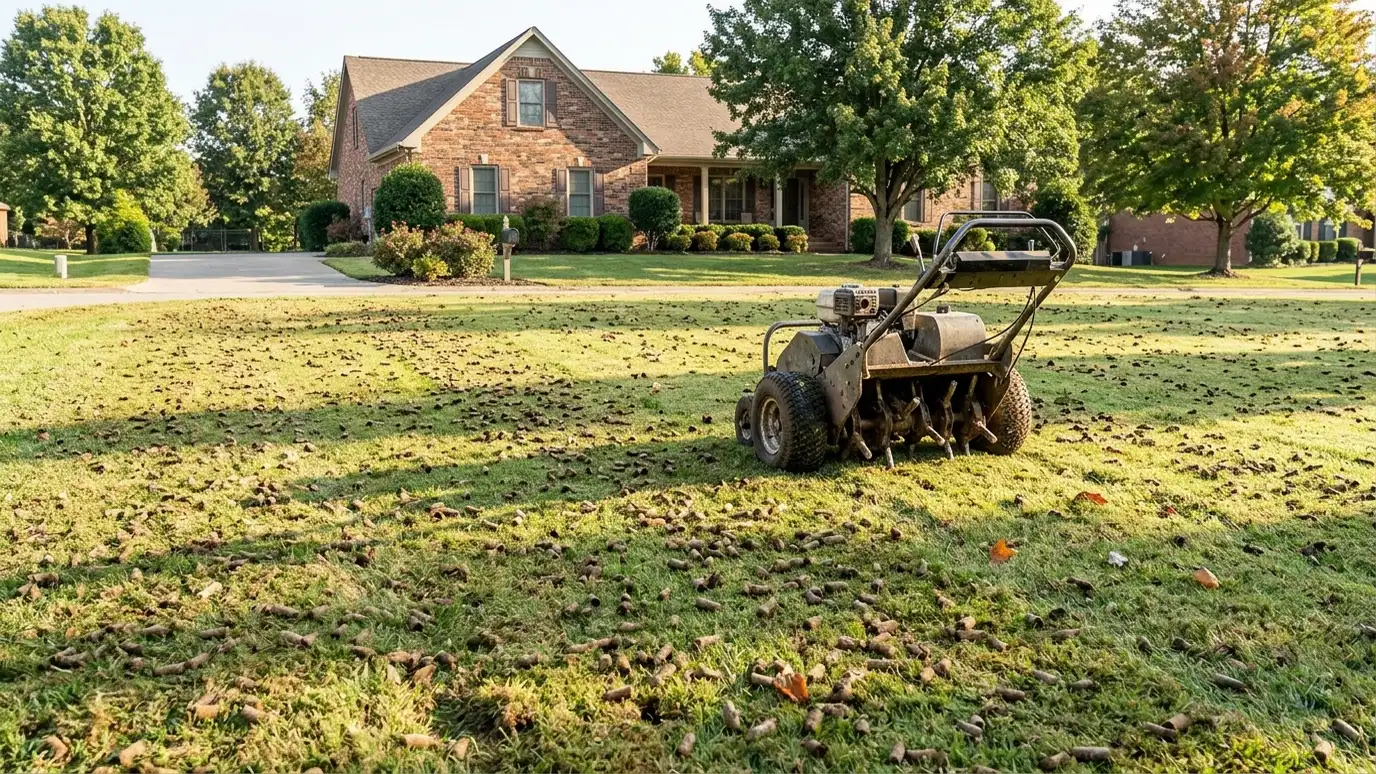
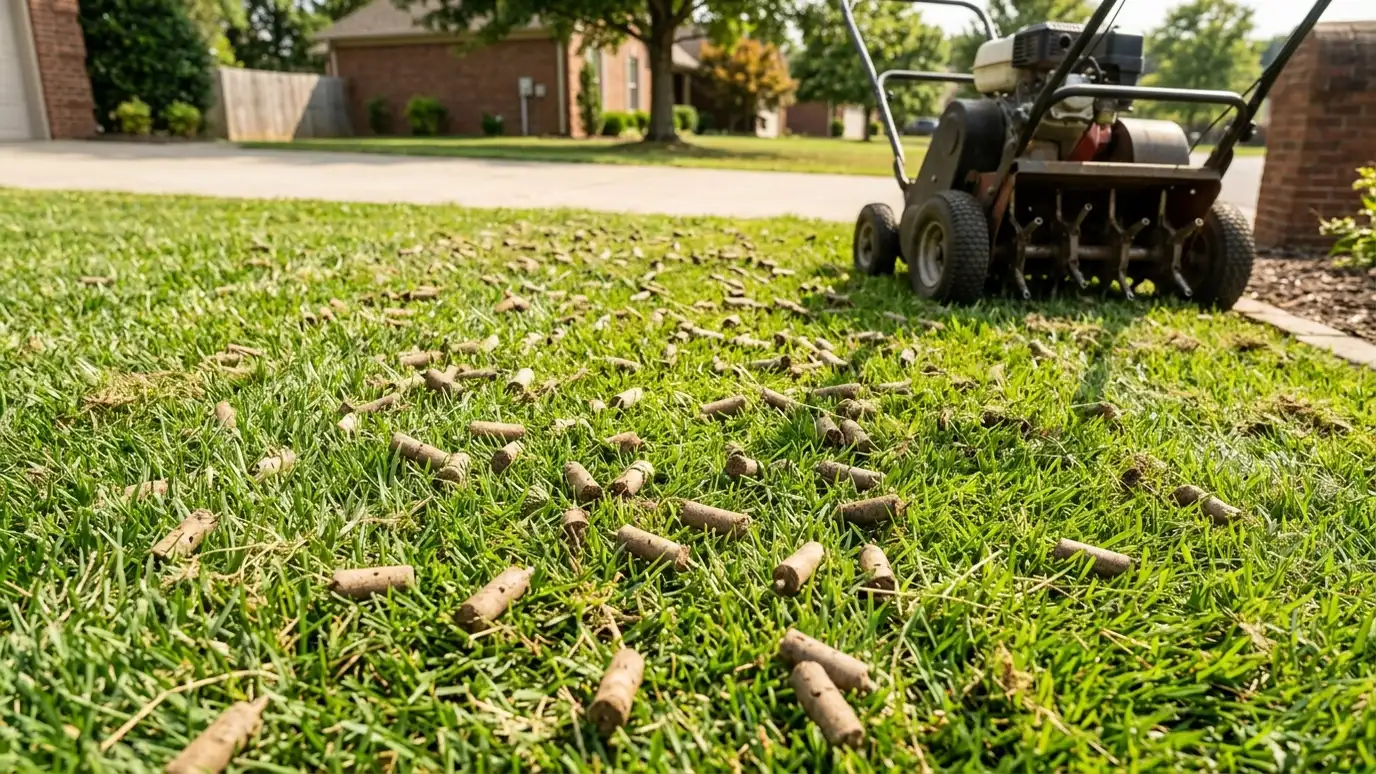
Core aeration pulls small plugs of soil from the lawn, opening channels for air, water and nutrients to reach roots. It relieves compaction, which is common in clay soils and around new homes.
It is one of the most effective things you can do for a thin lawn.
Mark irrigation heads, shallow lines and invisible dog fences before aeration day. Flags prevent damage and let the crew work with confidence.
Signs your lawn needs it
Water runs off or puddles, the soil is hard, a screwdriver does not push in easily, the lawn thins despite feeding and thatch is thick. Heavy traffic and clay soil make aeration more important.
Many Middle Tennessee lawns benefit every year.
Water the lawn lightly a day or two before aeration if the soil is hard. Slightly moist soil lets the tines pull deeper plugs.
When to aerate
Cool-season lawns are best aerated in early fall, when seed can be added. Warm-season lawns are aerated in late spring or early summer as they grow strongly. Avoid aerating during drought or dormancy.
Timing decides how fast the lawn recovers.
If you can only do one service this fall, choose aeration and overseeding together. The pairing outperforms either service alone.
Why overseed
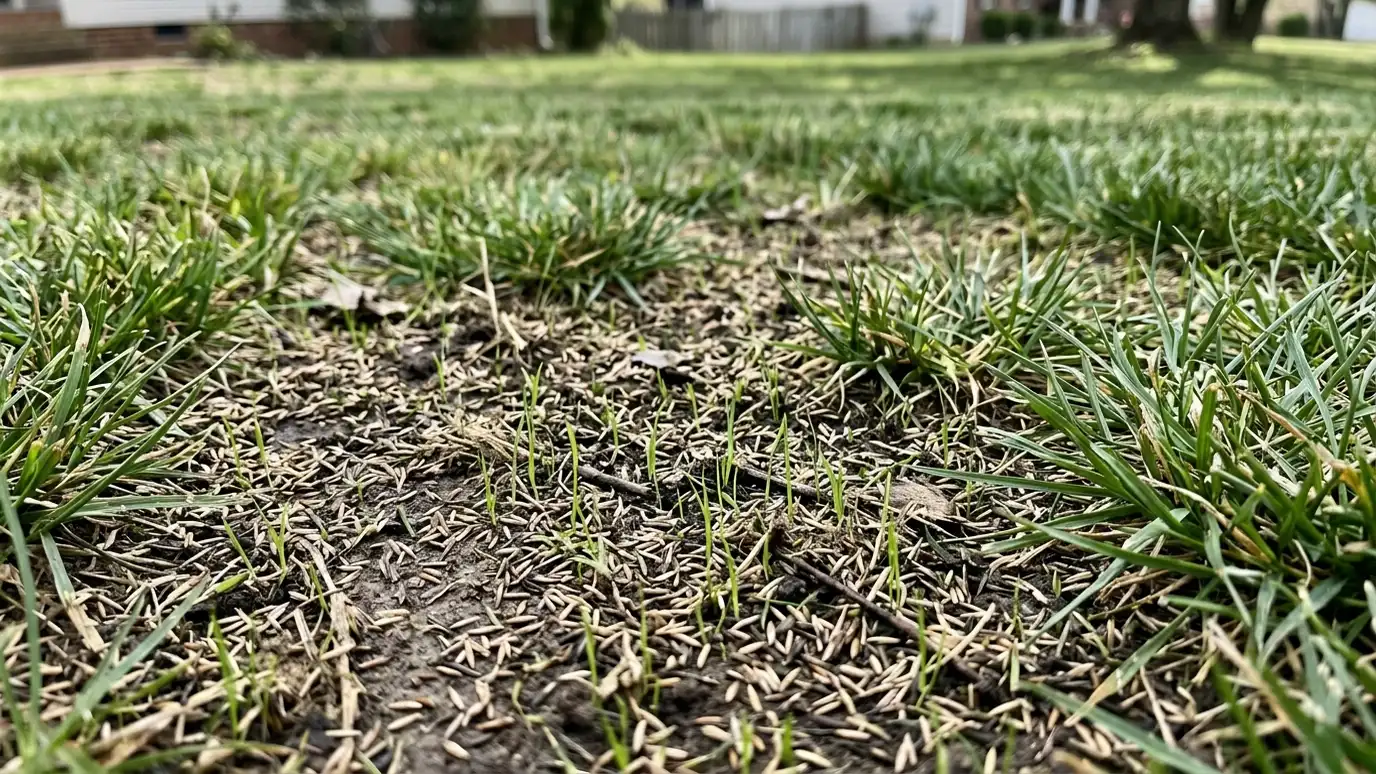
Overseeding adds new grass plants to thicken the lawn, repair damage and introduce improved varieties. For fescue, it is especially important because the grass does not spread to fill gaps.
Thicker turf means fewer weeds and better summer resilience.
Choose seed varieties known for heat and disease tolerance. Improved fescues are bred for Tennessee conditions and make a noticeable difference.
Aerate then seed
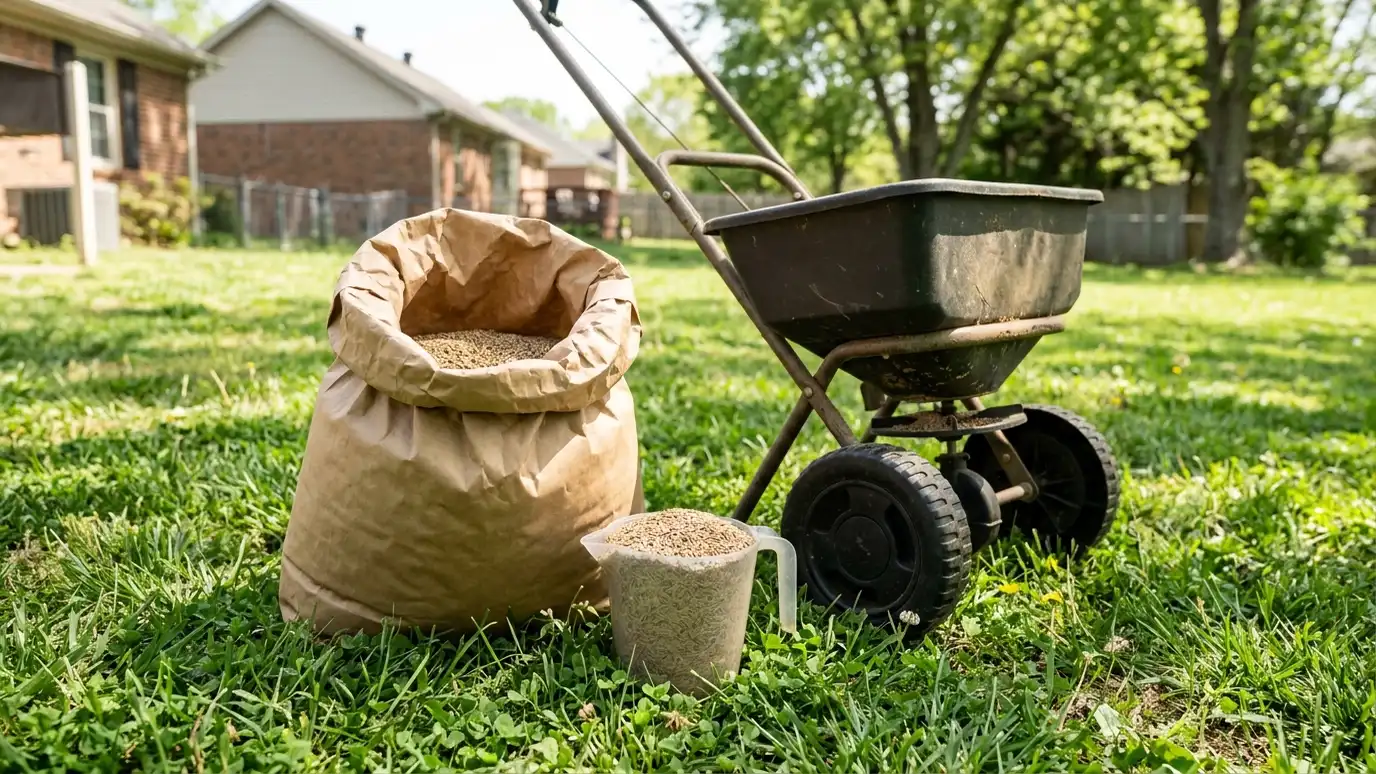
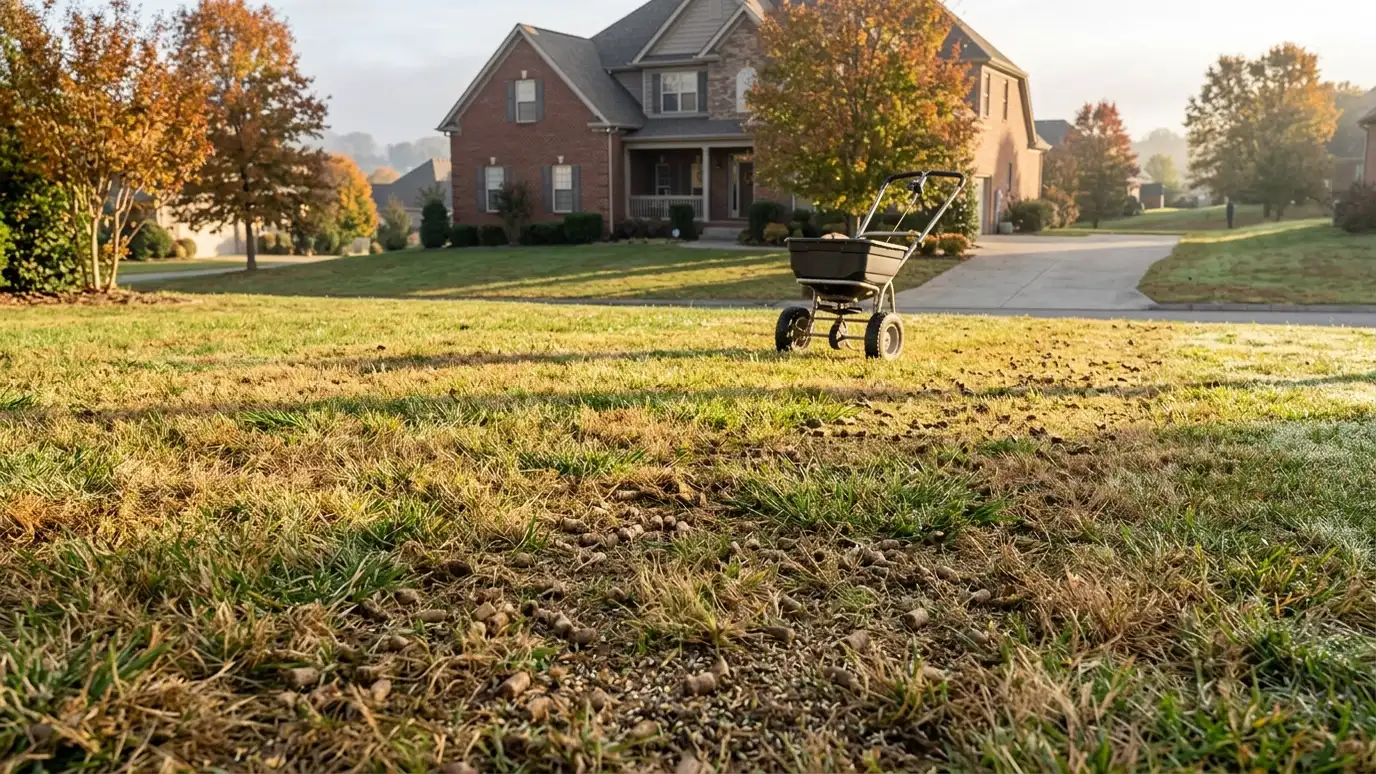
Seed dropped into aeration holes touches soil and sprouts far better than seed left on the surface. Starter fertilizer helps seedlings, and a light layer of compost can help even more.
The combination is the single most valuable fall service.
Keep a pack of seed on hand for touch-ups after the main job. Bare spots that appear after a few weeks fill in quickly with a second pass.
Aftercare
Keep the top inch of soil moist while seed sprouts, often with short, frequent watering. Delay mowing until new grass reaches the right height, then mow gently with a sharp blade. Hold off on weed killers that can harm seedlings.
Plugs break down within a couple of weeks.
Keep dogs and children off the new seed for the first few weeks. Light traffic is fine once the grass is established.
What to expect
Seedlings often show within one to three weeks, and the lawn thickens through fall and next spring. Results build with repeated seasons. A thick lawn handles heat, drought and weeds better.
Patience in the first fall pays off the following summer.
Take a photo of the lawn on the day of the service and again in spring. The change usually surprises people.
Aerate and overseed together in early fall for cool-season lawns, and keep the seed moist until it sprouts.