Why lawns need feeding
Grass is a crop that is cut every week, and each cut removes nutrients. Clay soils hold nutrients unevenly, and builders often strip the topsoil. Without feeding, grass thins, loses color and gives way to weeds.
A steady schedule builds density, which is the best defense against weeds.
Photograph the lawn in spring, summer and fall. Comparing images over time shows whether your feeding schedule is doing its job better than memory ever will.
Cool-season timing
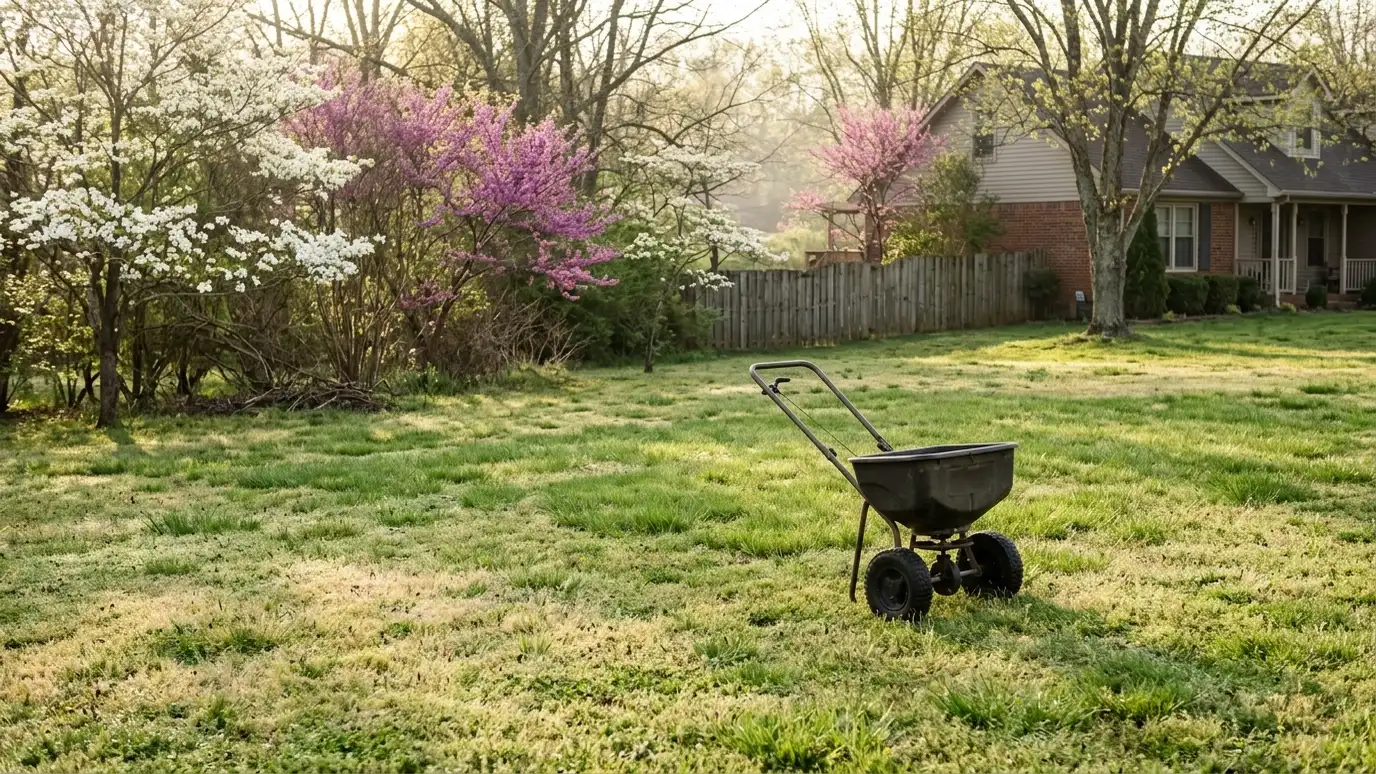
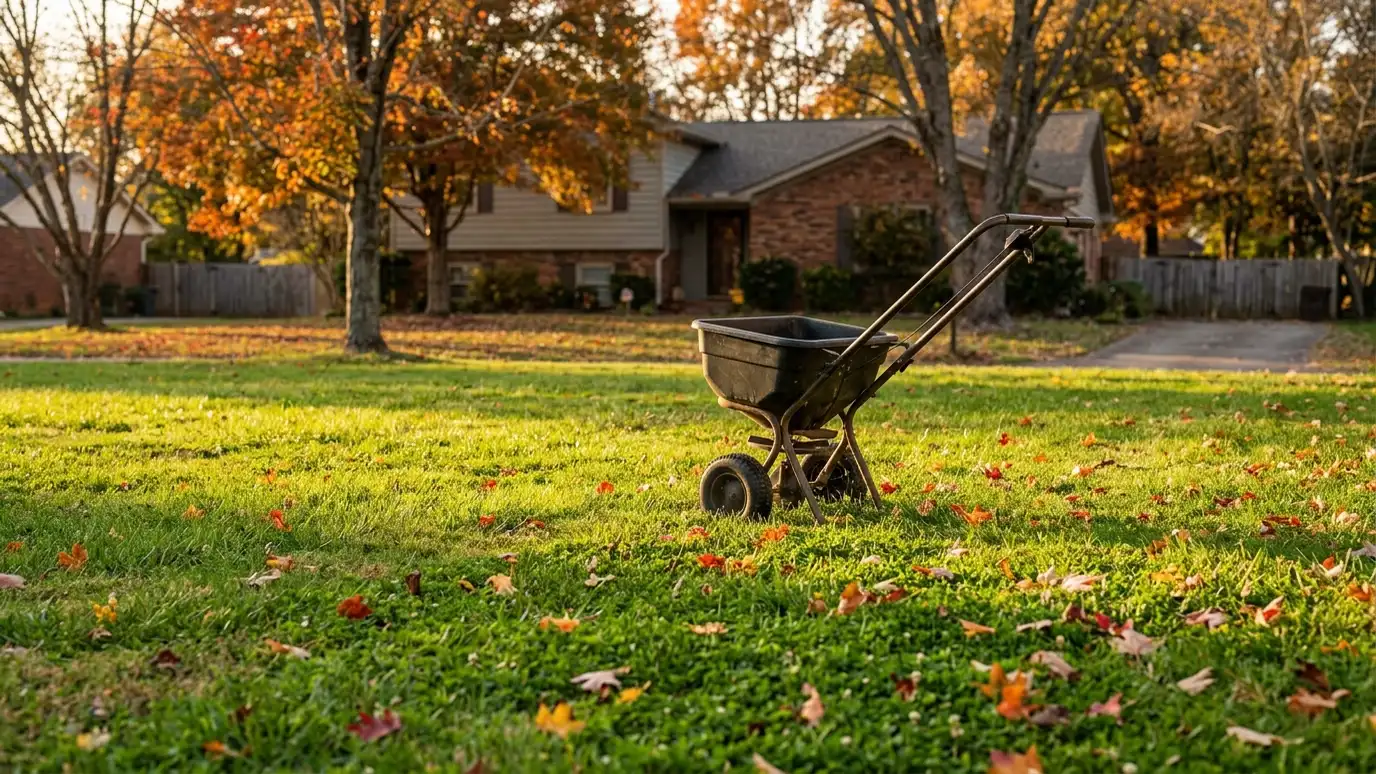
Tall fescue and bluegrass are fed in early spring and again in fall, with the fall feeding the most important. A light feeding in late spring is optional, and summer feeding is kept light or skipped to avoid disease.
A final winterizer in late fall supports roots and the next spring green-up.
If your fescue looks stressed in July, resist the urge to feed it. Water, mow high and wait for fall, when the grass is ready to use nutrients and grow roots.
Warm-season timing
Bermuda and zoysia are fed after they green up in late spring and through summer in a few light rounds. A light early fall feeding helps them harden off, and late fall feeding is avoided.
Feeding warm-season grass in fall pushes growth at the wrong time.
A warm-season lawn that looks pale in late spring may simply be waking up. Feed after it has begun to grow, so nutrients go to the grass, not to winter weeds.
Reading the bag
The three numbers show nitrogen, phosphorus and potassium. Most lawns need mostly nitrogen, with potassium for stress tolerance. Phosphorus should be applied only if a soil test shows a need.
Slow release nitrogen feeds gradually, while quick release gives fast color.
If you are unsure what to buy, a soil test and a short conversation save more money than trial and error. The bag with the highest numbers is rarely the best choice.
How much and how to apply
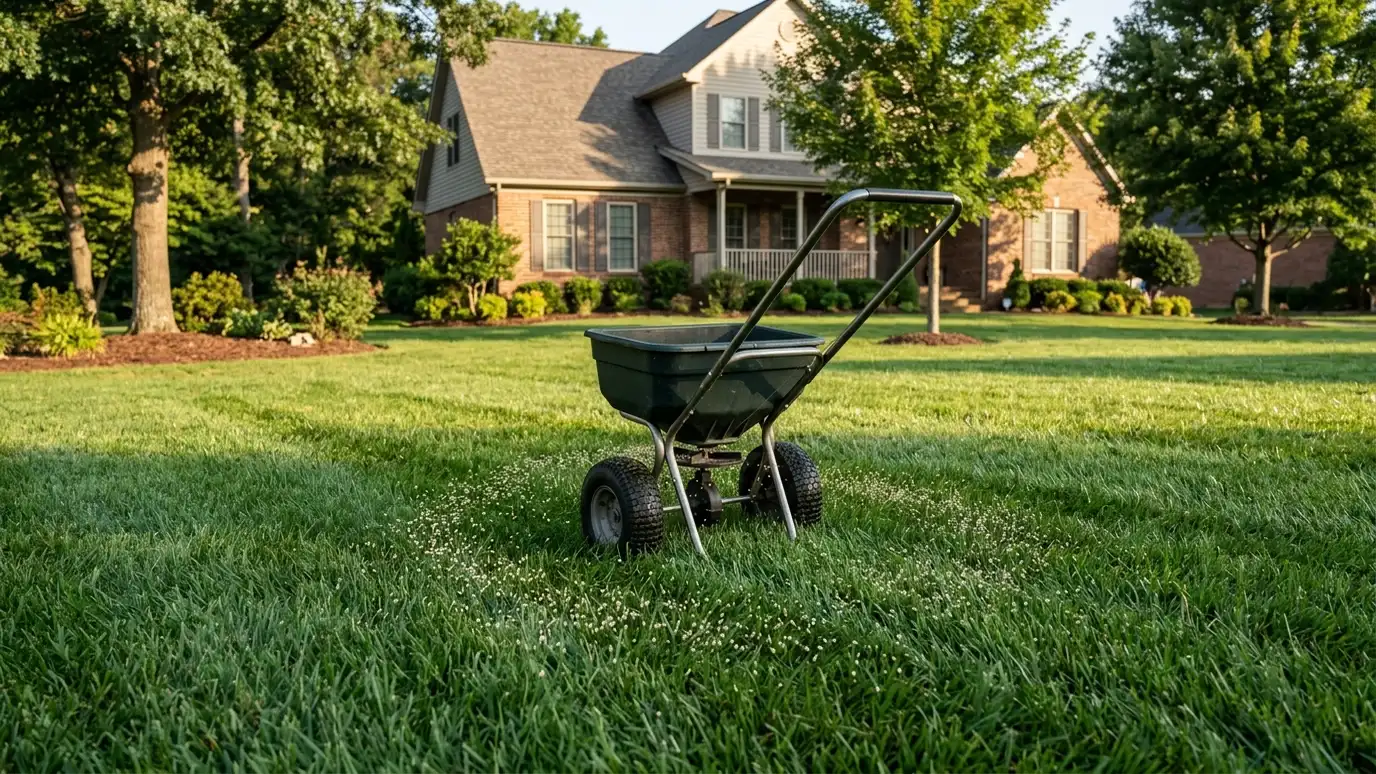
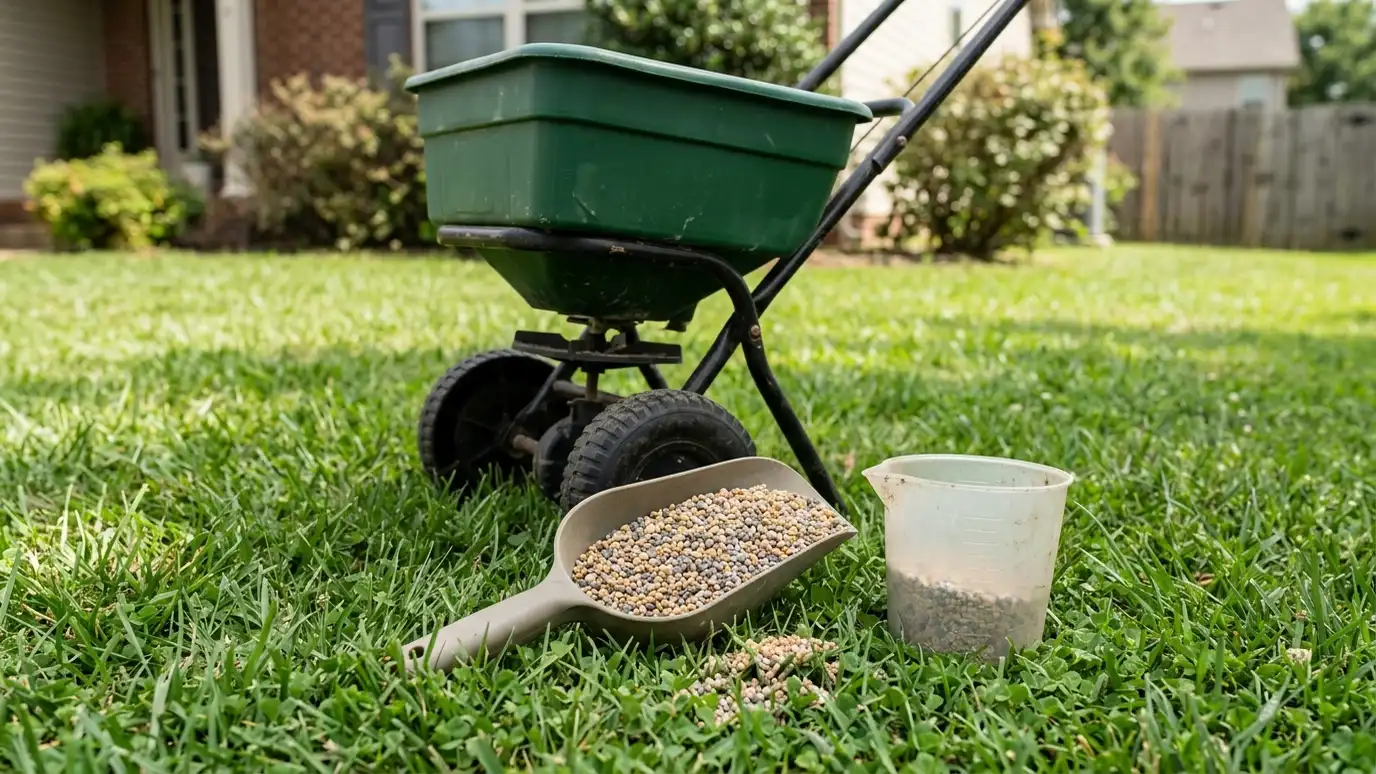
Typical rates are about one pound of nitrogen per thousand square feet per application. Calibrate your spreader and overlap carefully to avoid stripes. Water lightly after application, as the label directs.
More is not better. Overfeeding burns turf and feeds disease.
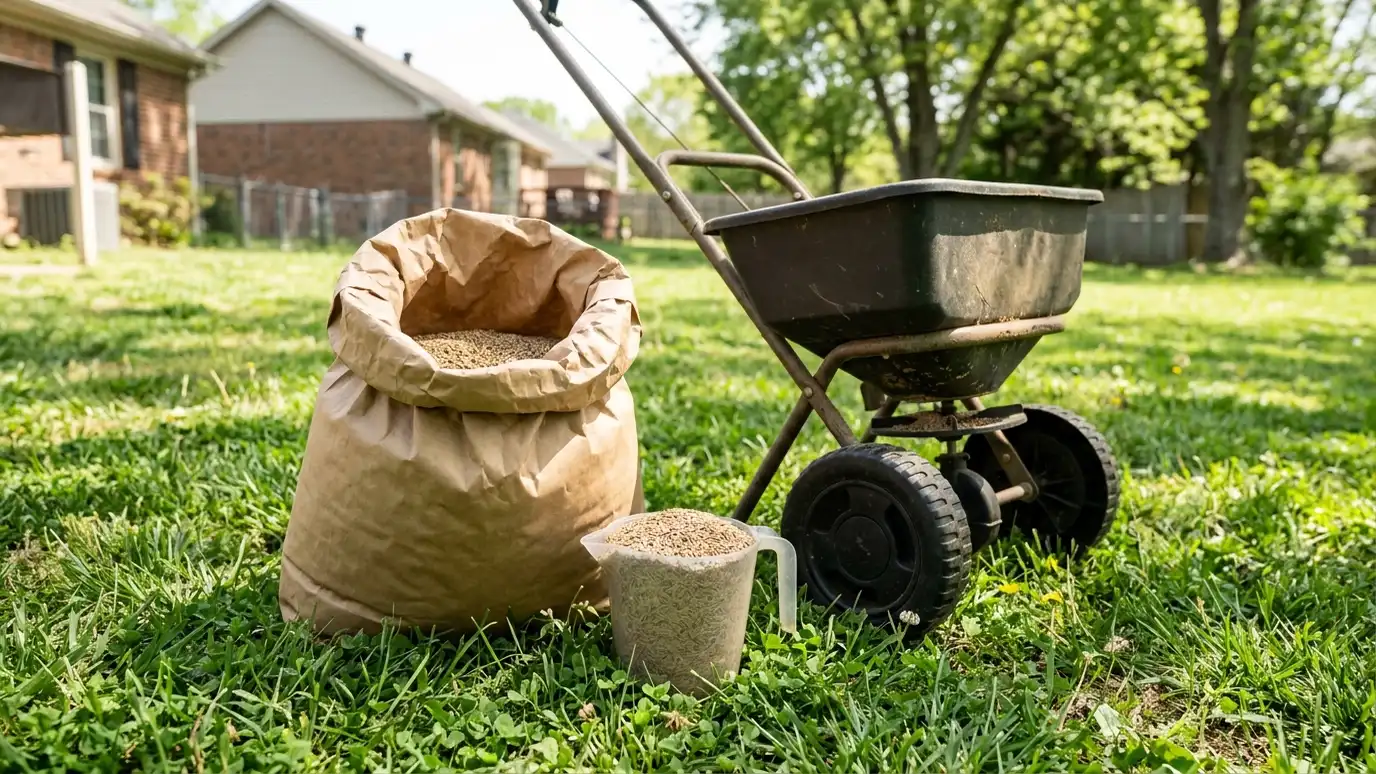
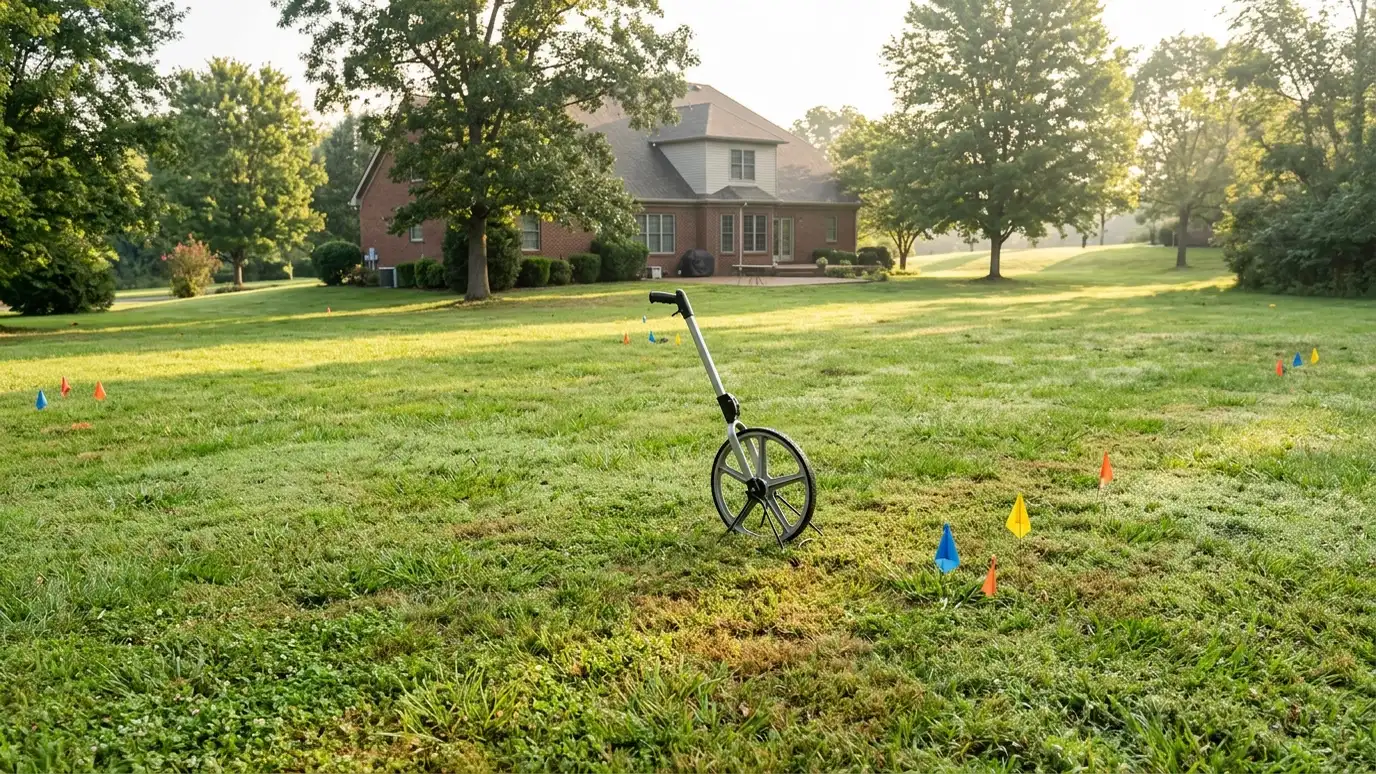
Weigh out the product and measure the area before you spread. Many lawns are over-fed simply because the lawn was larger or smaller than guessed.
Avoid common mistakes
Do not fertilize dormant or drought-stressed grass, and do not apply before heavy rain, which can wash product away. Avoid fertilizing at the wrong season for your grass type, and keep product off hard surfaces.
Sweep stray granules back onto the lawn.
Keep a log of what you applied and when. It helps you repeat what worked and avoid what did not, and it is invaluable if a problem appears.
Soil tests and adjustments
A soil test every two to three years shows pH and nutrient levels and takes the guesswork out of phosphorus and lime. Adjustments based on the test often improve results more than extra product.
Combine feeding with aeration and overseeding for the biggest improvement.
If you are not sure about pH or phosphorus, test first. A test costs little compared with a season of products your soil does not need.
Feed by season and grass type, use slow release products, apply at label rates and let a soil test guide the details.