Why test the soil
A soil test replaces guessing with data. It shows pH and levels of key nutrients, and it tells you whether lime or specific fertilizers will help. It can also show why a lawn is not responding to treatment.
Testing every two to three years is a good habit.
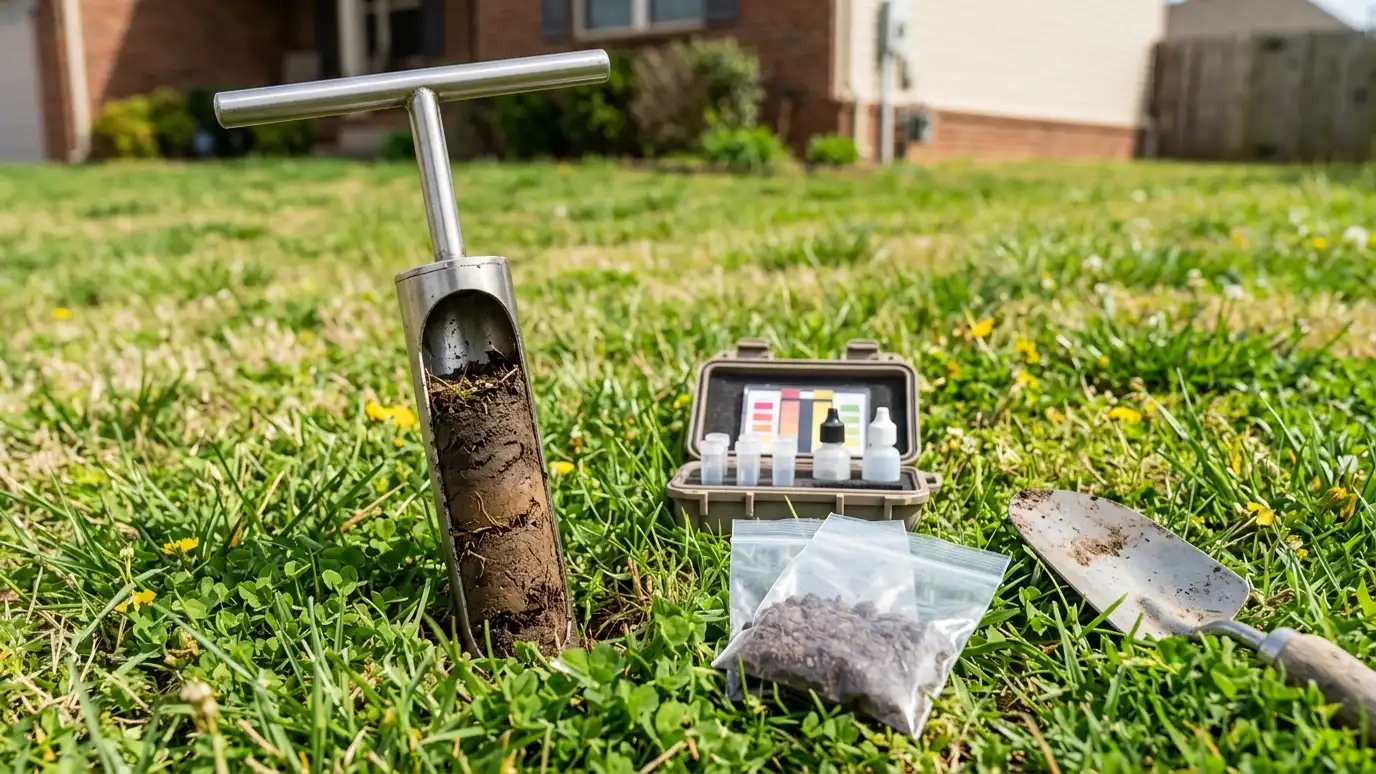
Label each sample bag clearly, and write down where you collected it. Notes make the results far more useful.
How to take a sample
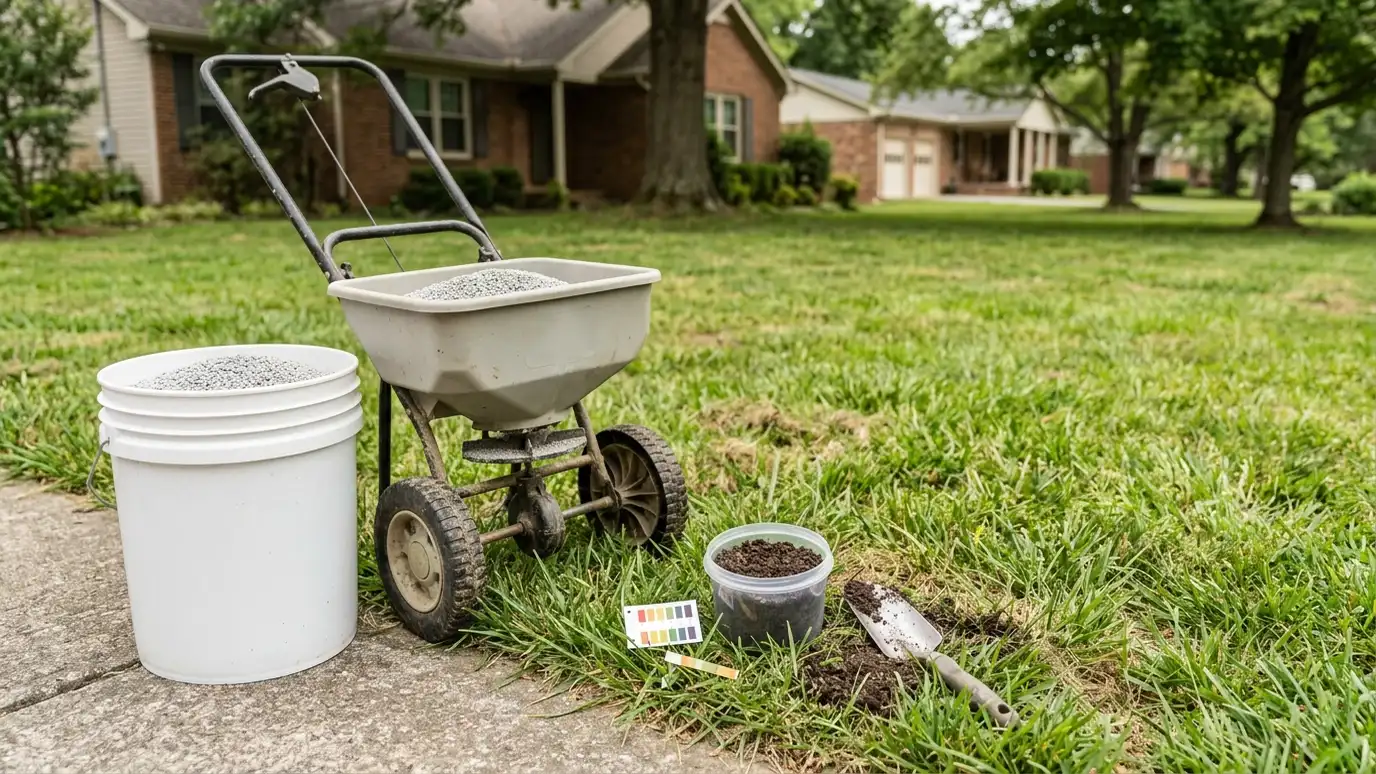
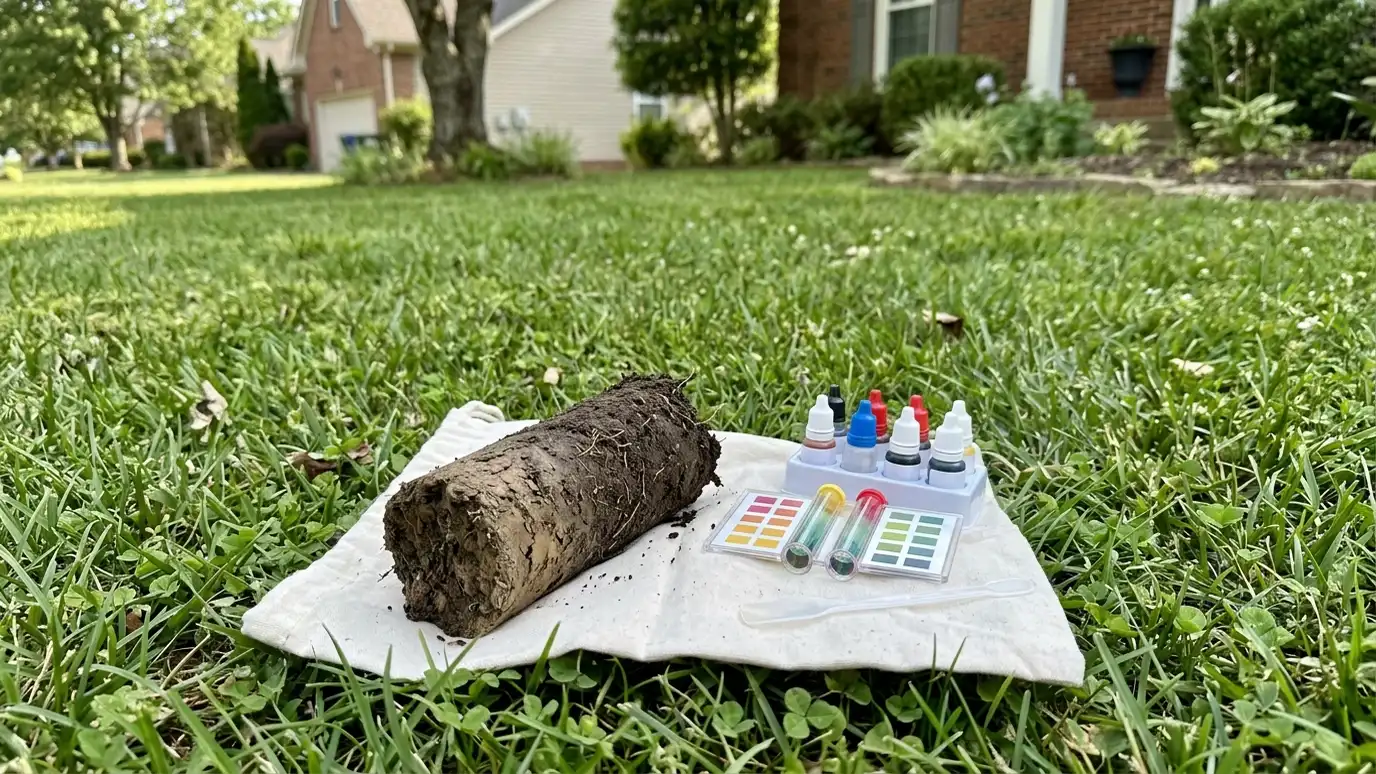
Collect small cores from several places in the lawn, about three to four inches deep, and mix them. Avoid areas that were recently fertilized or limed. Send the mix to a lab for analysis.
Sample front, back and shady areas separately if they differ.
Dig a small hole in the lawn and look at the layers. Thin topsoil over clay explains a lot about why grass struggles.
Reading pH
pH measures acidity. Most lawn grasses do best at around six to seven. Below that, nutrients are less available, and above it, micronutrients such as iron can lock up. Lime raises pH and sulfur lowers it.
Changes take months, and retesting confirms them.
If your result shows low pH, plan to retest after lime. A follow-up confirms the change and prevents over-liming.
Nutrients
Nitrogen is usually applied regularly, while phosphorus and potassium depend on the test. Many Tennessee soils are high in phosphorus already. Potassium supports stress tolerance and disease resistance.
Apply what the test shows, not what a bag suggests.
Do not add phosphorus unless the test calls for it. Excess phosphorus can run off into streams and does nothing for the lawn.
Clay and compaction
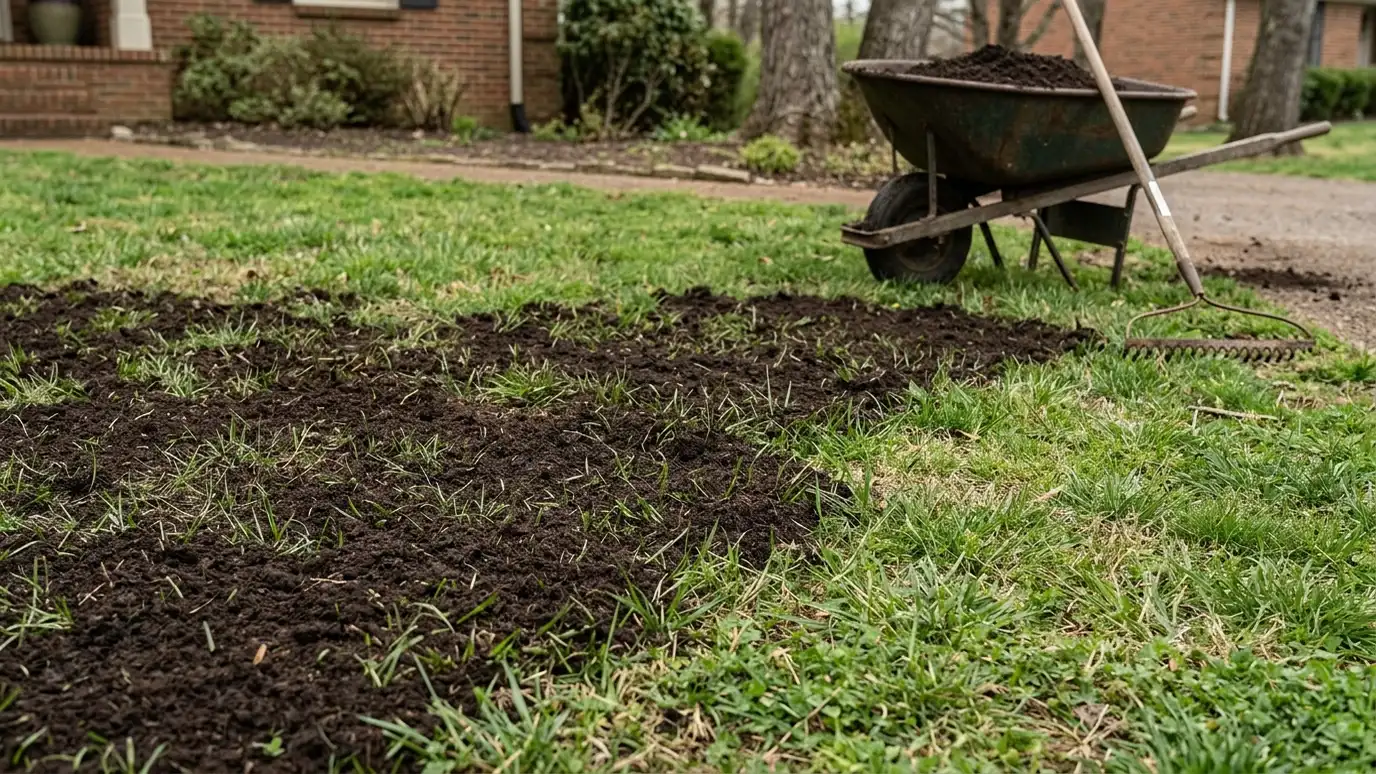
Clay holds nutrients but compacts easily. Compacted soil sheds water and starves roots of air. Core aeration and compost topdressing improve structure over time.
Avoid heavy traffic on wet clay.
Try to avoid driving or parking on the lawn when it is wet. A single heavy vehicle can compact clay for years.
Organic matter
Compost and returned clippings feed soil life and improve water holding. Over several seasons, they make soil easier for roots to explore and treatments to work.
Organic matter is the quiet driver of long-term lawn health.
Save grass clippings, leaves in small amounts and compost for the lawn. These simple habits slowly rebuild the soil.
Putting it together
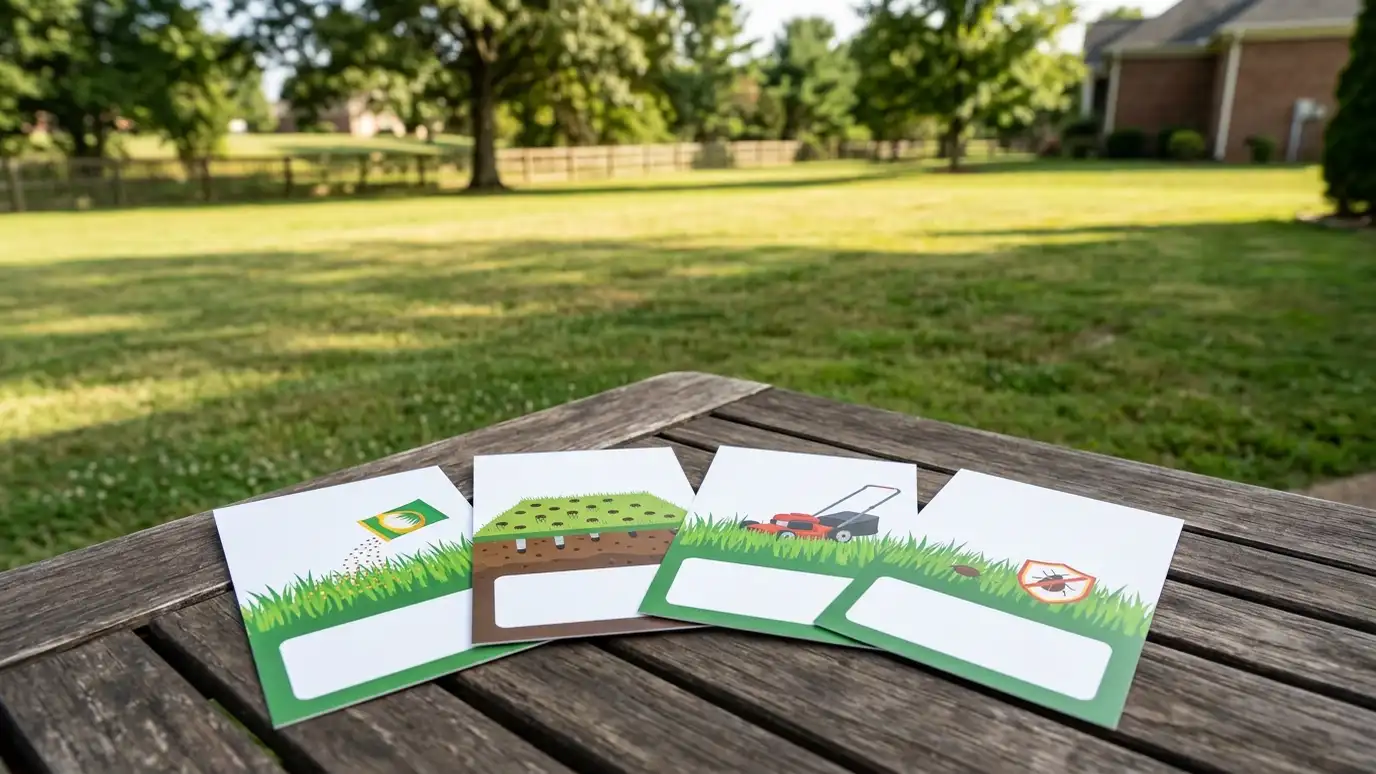
Use the test to set lime and fertilizer, aerate to relieve compaction, topdress with compost where useful and retest in a few years. These steps build a lawn that needs less rescue.
Soil work is slow, but it is the foundation of everything else.
Make a note on your calendar to test again in two or three years. It is a small task that keeps the plan on track.
Test before you treat, aerate for compaction and build organic matter over time.