Diagnose before you treat
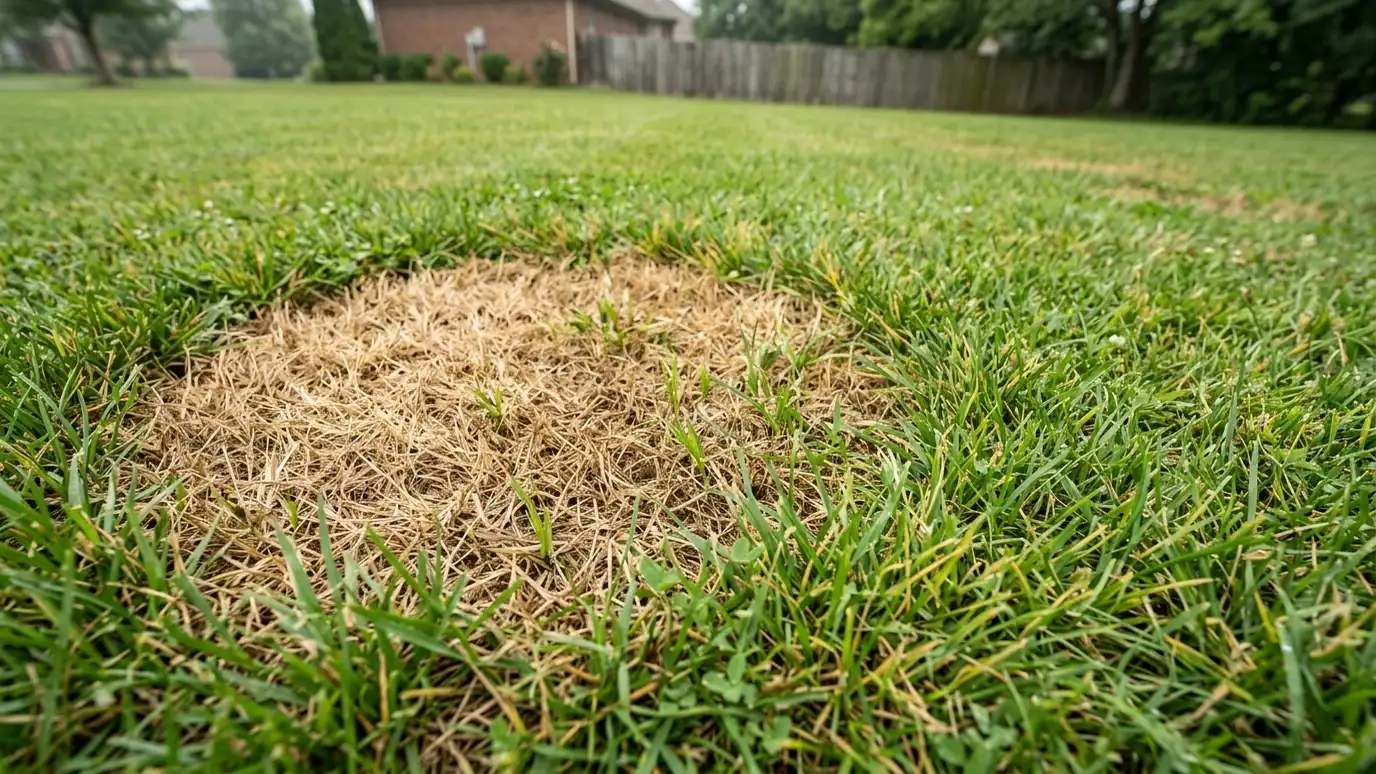
Many lawn problems look alike. Brown patches can be drought, disease, grubs or pet damage. Look at the pattern, check the roots and thatch and consider the weather before reaching for a product.
The right treatment depends on the right diagnosis.
Take a clear photo of the damage and of the edge where healthy grass meets the problem area. These images help narrow down the cause quickly.
Brown patch and fungus
Brown patch and other fungi appear in warm, humid weather, especially in fescue. Prevent them with morning watering, correct mowing and moderate summer nitrogen. Treat active outbreaks with a fungicide as directed.
Fescue usually recovers when the weather cools.
Check your lawn first thing in the morning in humid weather. Fungal growth is often visible as a gray, cobwebby ring while dew is still on the grass.
Grubs
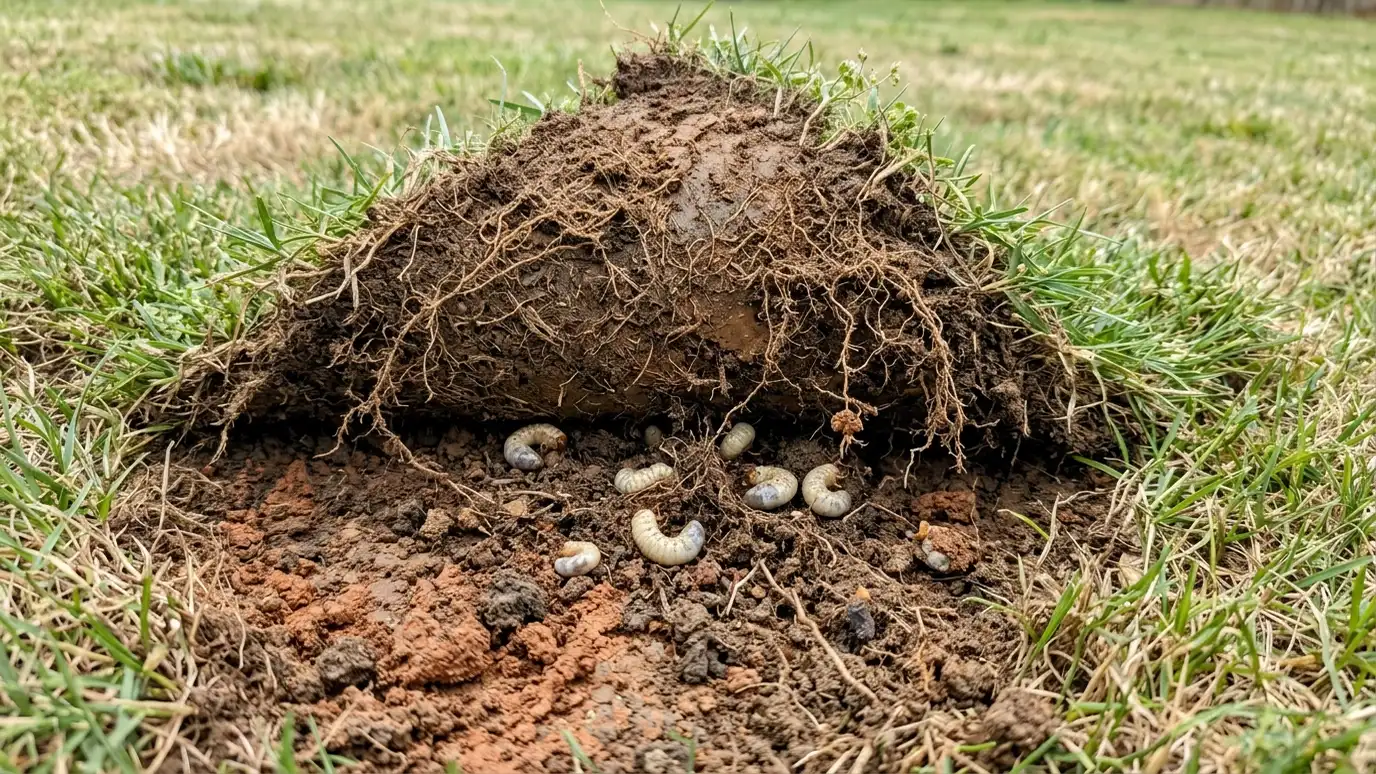
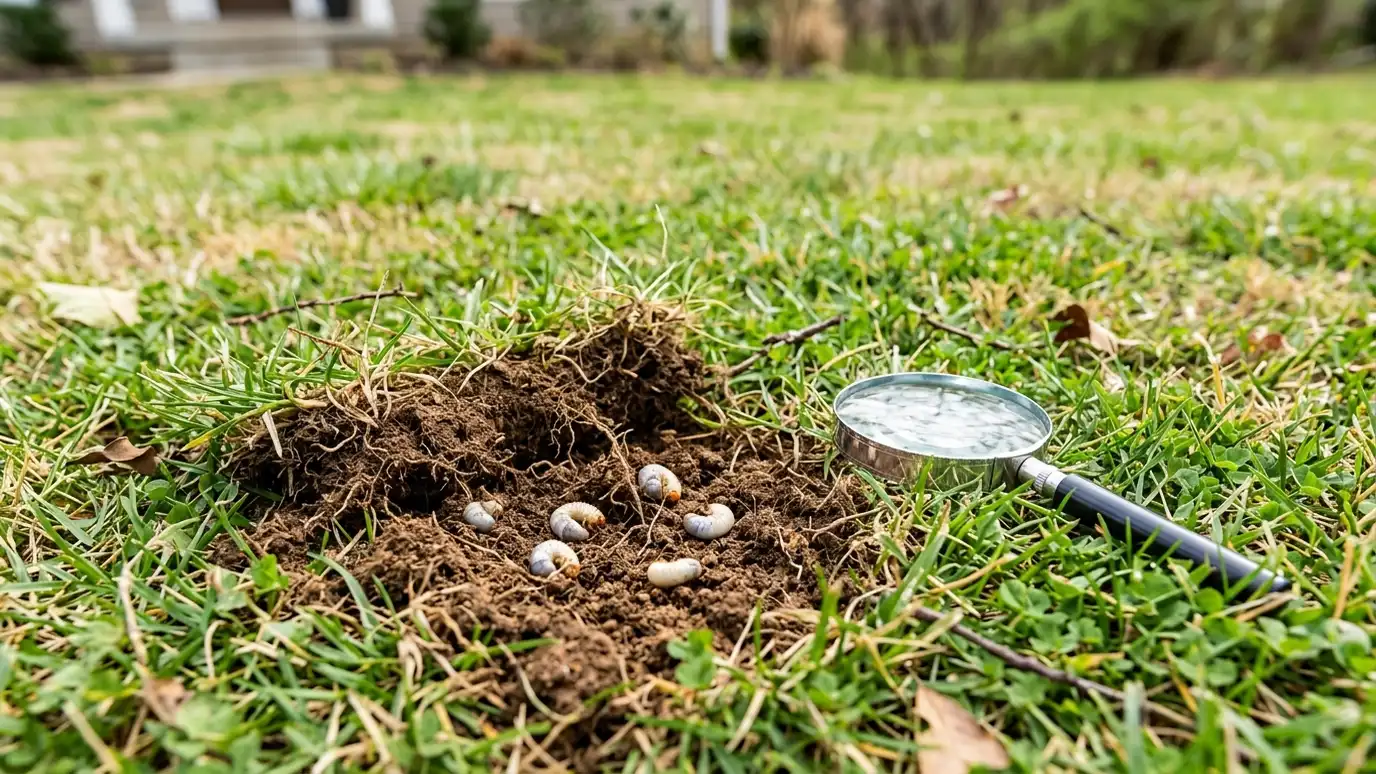
White grubs eat roots in late summer and fall. Peeling turf, spongy patches and animals digging are signs. Preventives in early summer protect roots, and curative products help when counts are high.
Not every lawn needs grub control every year.
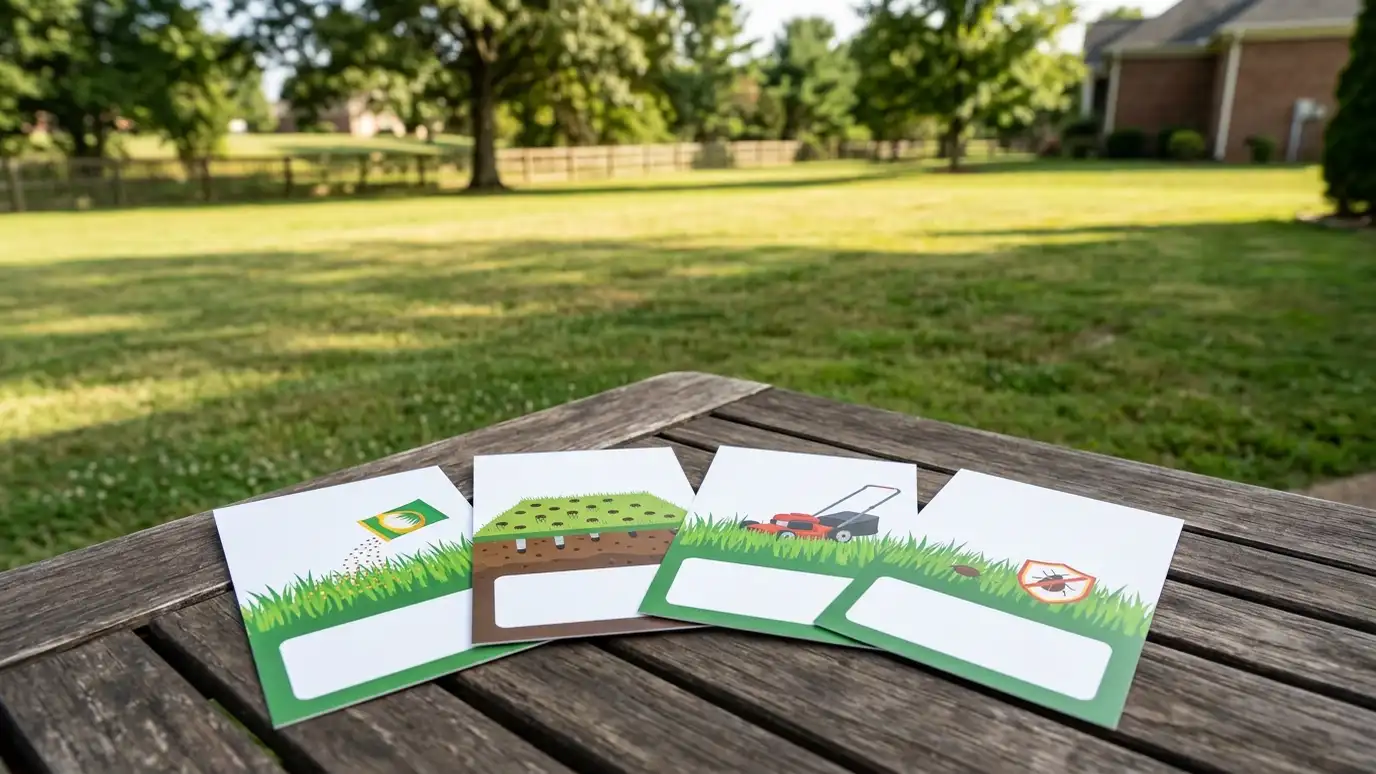
Mark the date for your grub preventive each year. A reminder in early summer is far easier than a repair in the fall.
Armyworms and webworms
These caterpillars chew blades in late summer, often leaving ragged patches. A soapy water flush brings them to the surface. Treat when numbers justify it, and expect recovery with water and feeding.
Scouting catches them early.
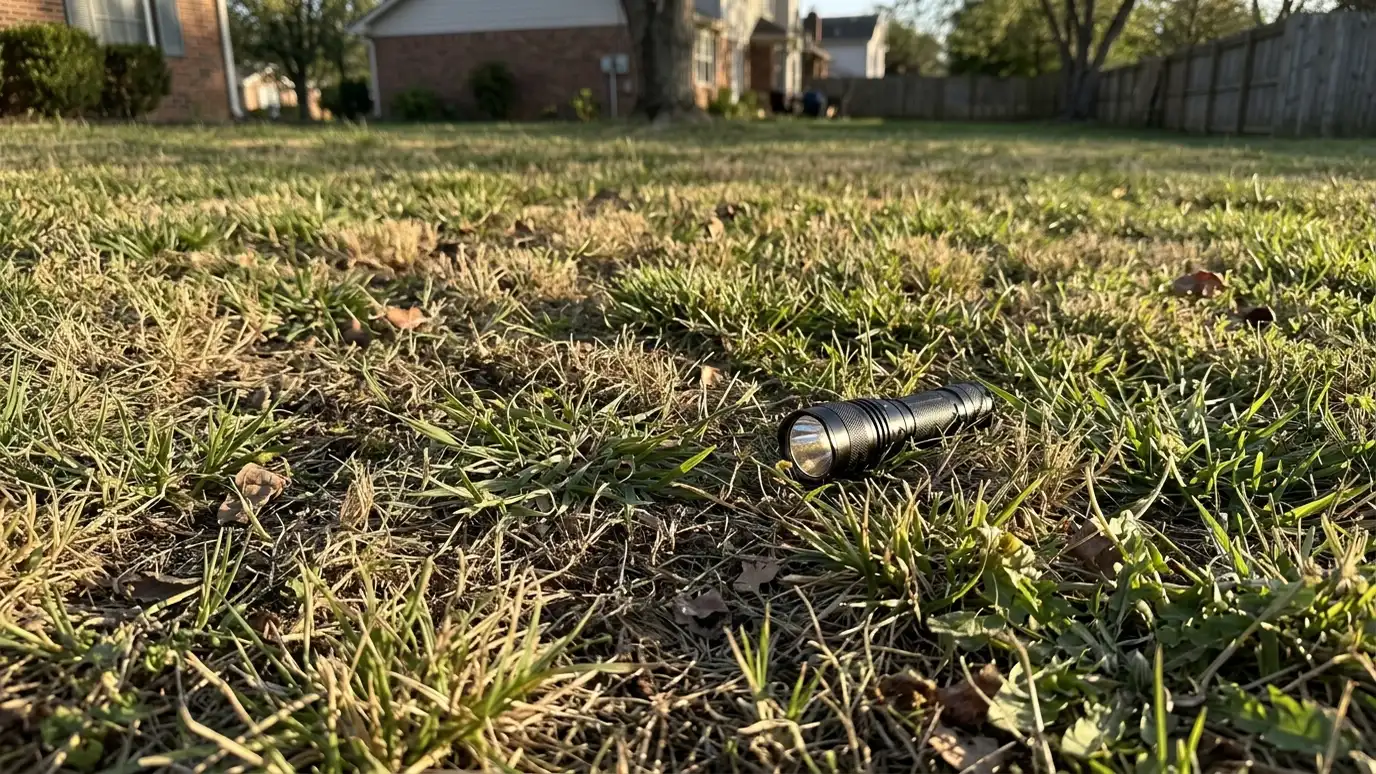
Scout your lawn after dusk with a flashlight in late summer. Active caterpillars are easiest to spot at night.
Chinch bugs and mites
Hot, sunny areas, especially near pavement, can suffer from sap-sucking insects. Damage looks like drought but does not respond to watering. A close look at the thatch edge confirms the cause.
Healthy turf resists these pests better.
Look closely at the sunniest edges first. Heat-loving insects tend to appear there before the rest of the lawn.
Fire ants, moles and voles
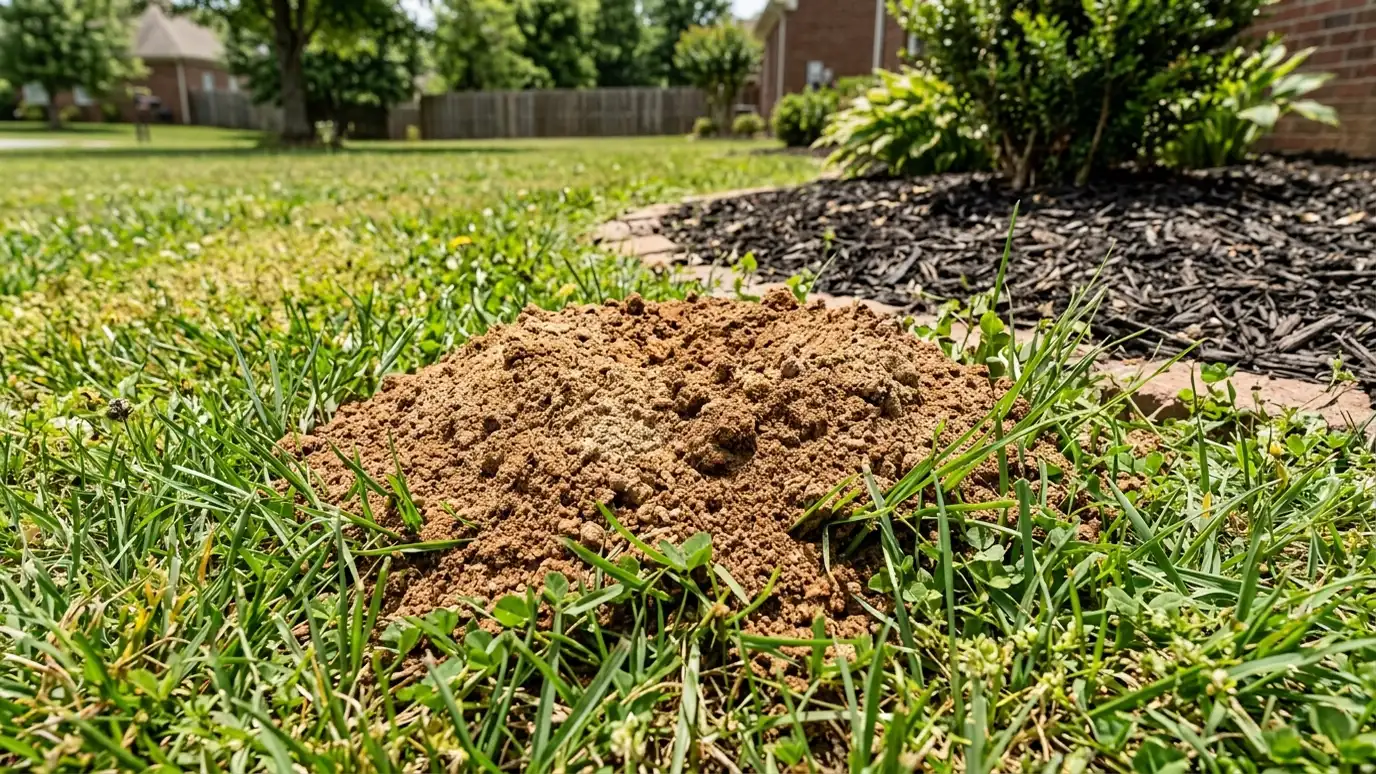
Fire ants build mounds in sunny lawns, and bait treatments work best against colonies. Moles tunnel after grubs and earthworms, while voles use surface runways. Different animals need different controls.
Repair tunnels and bare spots after control.
Fill in mole tunnels and level mounds promptly. It helps the grass recover and makes new activity easier to see.
Prevention habits
Healthy turf, correct mowing and watering, balanced feeding and good drainage prevent many problems. Scout in midsummer, and call early if something looks wrong. Prompt action saves lawns.
A professional inspection can save you from the wrong treatment.
Keep a short log of problems, dates and treatments. Patterns over several years show you when to act before damage appears.
Look at the pattern, check the roots, then treat the actual cause at the right time.